
观观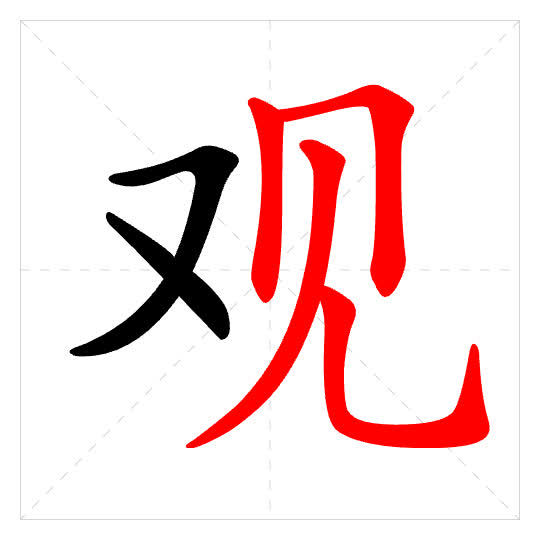
Basic Meaning
v
Often used in formal or intentional contexts for viewing, watching, or inspecting. 观光 (guanguang1) means 'to sightsee'. 走马观花 means 'to look at flowers while riding a horse', implying a cursory or superficial glance.
to observe; to watch carefully; to view
仔细看。
Words:
Sentences:
- 我们在实验室用显微镜观察细胞。We use a microscope to observe cells in the lab.
- 周末有很多人去博物馆参观。Many people go to the museum to visit on weekends.
- 我经常观鸟,这是一种很好的放松方式。I often watch birds; it's a great way to relax.
n
Used to describe a remarkable or impressive sight one sees. Often part of two-character words.
spectacle; sight; view; impressive scene
看到的景象。
Words:
奇观壮观洋洋大观大观创观
Sentences:
- 夜晚的灯光秀真是一大奇观。The light show at night is truly a magnificent spectacle.
- 站在山顶,你可以看到壮观的日出景象。Standing on the mountaintop, you can see the spectacular sunrise view.
n
Refers to a person's fundamental beliefs or attitudes about life, the world, or specific issues. 乐 means 'happy', 悲 means 'sad'. 世界观 is 'worldview'.
viewpoint; outlook; perspective
对事物的认识或看法。
Words:
乐观悲观世界观人生观宇宙观
Sentences:
- 他总是很乐观,遇到困难也不怕。He is always optimistic and not afraid of difficulties.
- 阅读能改变我们的人生观和世界观。Reading can change our outlook on life and worldview.
Writing & Component
Radical见
Structureleft_right
Stroke Count6
Strokes㇇丶丨𠃍丿乚