
至至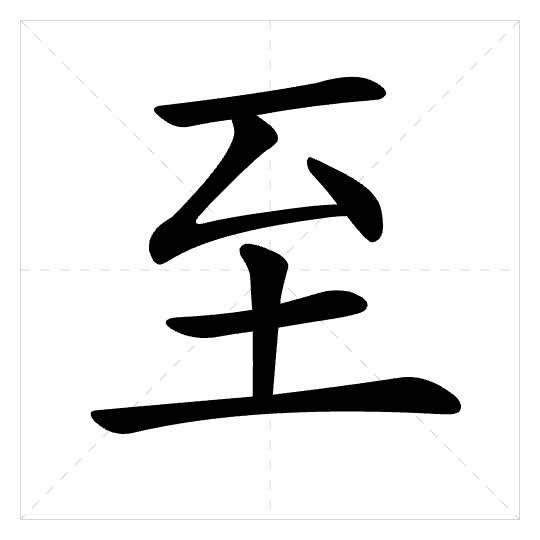
Basic Meaning
v
常见于书面语和固定表达,如“自始至终”。口语中表示“到某地”常用“到(dào)”。“至今”在现代汉语中是常用词。
to arrive; to reach; to get to; to come, to extend to (a point/state).
到。到来。
Words:
Sentences:
- 从开始到结束,他都认真负责,自始至终没有松懈。From start to finish, he has been conscientious and responsible, never slacking off from the beginning to the end.
- 我打算今年夏天坐火车从北京至上海旅行。I plan to travel by train from Beijing to Shanghai this summer.
v
此用法在现代汉语中多用在书面语或构成固定词语,如“至交”、“至理名言”。不独立用作谓语。注意与形容词或副词“最(zuì)”的词性区别。
to be the most; to be the best; to be the ultimate.
最好的。
Words:
至交至理名言如获至宝甚至至宝
Sentences:
- 他是我最好的朋友,是我一生的至交。He is my best friend and my lifelong most intimate companion.
- 这个道理很简单,却是真正的至理名言。This reasoning is simple, yet it is a genuine, most true and famous saying.
adv
常表示极致的程度,相当于“最”。通常修饰形容词,如“甚至”、“至高无上”。
extremely; most; to the furthest extent.
极;最。
Words:
仁至义尽至为感谢至愚至高无上至尊
Sentences:
- 保护环境是当今世界至关重要的一件事。Protecting the environment is an extremely critical matter in today's world.
Writing & Component
Radical至
Structuretop_bottom
Stroke Count6
Strokes一𠃋丶一丨一