
自自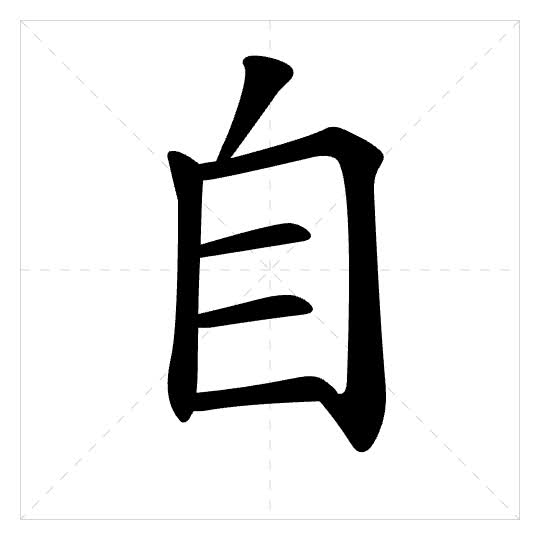
Basic Meaning
pron
Used reflexively to refer back to the subject of the sentence. Often appears in fixed phrases or as part of compound words.
oneself; myself; yourself; himself; herself; itself; themselves
代词,自己,己身,本人。
Words:
自强不息自给自足自以为是自不量力自告奋勇
Sentences:
- 他自告奋勇去帮忙He volunteered to help.
- 她总是自以为是,不听别人的意见She always thinks she's right and doesn't listen to others' opinions.
- 我们要自强不息,努力学习We must strive continuously and study hard.
adv
Indicates something is expected or self-evident, often used in formal or literary contexts. Can be part of words like 自然.
naturally; of course; obviously
自然;当然。
Words:
Sentences:
- 他学习很努力,成绩自然很好He studies very hard, so his grades are naturally good.
- 这个问题很简单,答案自不待言This question is very simple, and the answer goes without saying.
prep
Used to indicate origin, starting point, or time. Commonly appears in phrases like 自小, 自古.
from; since; starting at
从;由。
Words:
自小自此自古自远而近自上而下
Sentences:
- 他自小就喜欢画画He has liked drawing since he was little.
- 这本书自上而下地介绍了历史This book introduces history from top to bottom.
- 自古人们就喜欢听故事People have liked listening to stories since ancient times.
pron
Forms verbs such as 自发, 自觉, 自愿. The meaning depends on context: e.g., 自发 (self-initiated), 自爱 (self-love).
attached to monosyllabic verbs to form compound verbs. 1. Indicates the action is initiated by oneself without external force. 2. Indicates the action is directed back at oneself.
附在单音节动词前,构成合成动词。1表示动作由自己发出,并非外力推动。2表示动作由自己发出,并及于自身。
Words:
Sentences:
- 他自发地组织了一次聚会He spontaneously organized a gathering.
Writing & Component
Radical自
Structuresingle
Stroke Count6
Strokes丿丨𠃍一一一