
脸脸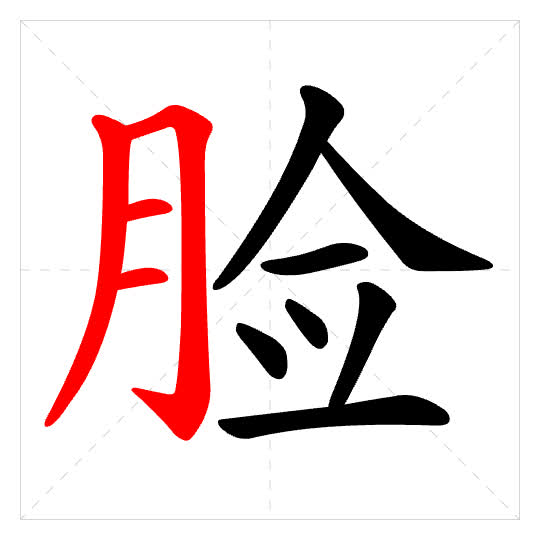
Basic Meaning
n
refers to the physical face; commonly used in everyday contexts like describing appearance or hygiene
face (the front part of the head from forehead to chin)
头的前部,从额到下巴。
Words:
圆脸脸蛋洗脸脸庞脸色
Synonyms:
Sentences:
- 她有一张可爱的圆脸。She has a cute round face.
- 我每天早上都要洗脸。I wash my face every morning.
n
often used with '儿' suffix in colloquial speech; applies to objects like doors or shoes
front part (of certain objects)
(~儿)某些物体的前部。
Words:
门脸儿鞋脸儿
Sentences:
- 这家商店的门脸儿很漂亮The front part of this store is very beautiful.
- 这双鞋的鞋脸儿有点紧The front part of these shoes is a bit tight.
n
used in contexts involving pride, shame, or social respect; often in phrases like 丢脸 or 不要脸
face (as in reputation, dignity, or social standing)
面子;情面。
Words:
丢脸不要脸赏脸没脸脸薄
Synonyms:
Sentences:
- 他在公共场合丢脸了。He lost face in public.
- 请不要做这种不要脸的事。Please don't do such shameless things.
n
refers to the expression or look on someone's face; commonly used to describe emotions or reactions
facial expression
(~儿)脸上的表情。
Words:
笑脸脸神鬼脸露脸翻脸
Sentences:
- 他突然翻脸,让我很惊讶。He suddenly changed his expression, which surprised me.
- 她总是带着笑脸。She always has a smiling face.
Writing & Component
Radical月
Structureleft_right
Stroke Count11
Strokes丿𠃌一一丿㇏一丶丶丿一