
背背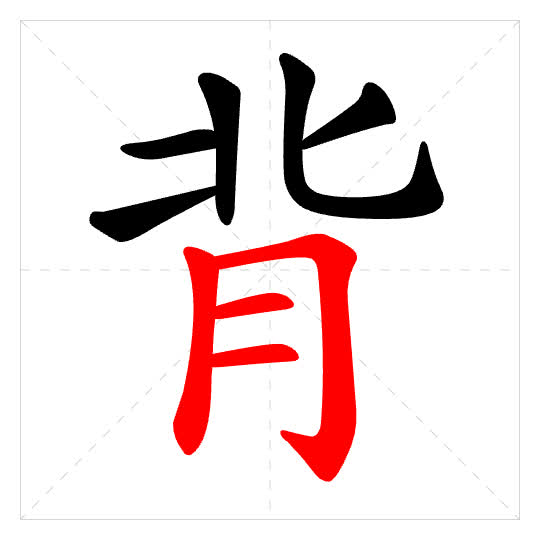
Basic Meaning
n
指人体的后胸到腰之间的部分。
back (of the torso)
上身后部与胸腹相对的部分。
Words:
背脊背影汗流浃背后背腹背受敌
Sentences:
- 跑了很久,他的后背被汗水浸湿了。After running for a long time, his back was soaked with sweat.
n
用于物体。
back; reverse side
(~儿)某些物体的反面或后部。
Words:
刀背手背墨透纸背力透纸背背后
Sentences:
- 这把刀的刀背很厚,不容易损坏。The back of this knife is very thick and not easily damaged.
- 写毛笔字时,要注意力透纸背。When writing with a brush, pay attention to the force penetrating the paper (showing strong technique).
v
to turn one's back to; to have one's back towards
用背部对着,跟“向”相对。
Words:
背水一战人心向背背山面海背光背灯
Antonyms:
Sentences:
- 他背光站着,我看不清他的脸。He was standing with his back to the light, so I couldn't see his face clearly.
- 战士们背水一战,非常英勇。The soldiers fought with their backs to the river, showing immense bravery.
v
常用于书面语境,如“背井离乡”。
to leave
离开。
Words:
背井离乡背离背乡
Synonyms:
Sentences:
- 为了工作,他不得不背井离乡。For work, he had no choice but to leave his hometown behind.
- 他的很多想法已经背离了最初的计划。Many of his ideas have deviated from the original plan.
v
常用搭配:背地里。
to hide; to conceal; to act in secret
躲避;瞒。
Synonyms:
瞒避躲
Sentences:
- 不要在背后说别人的坏话。Don't gossip about others behind their backs.
- 他总是背着他父母干一些自己的事。He always hides things from his parents and does his own stuff.
v
通常用于指记忆和说出文字内容。
to recite; to memorize
背诵。
Words:
背诵倒背如流背书背述背文
Sentences:
- 上课前,老师让我们背诵昨天学的课文。Before class, the teacher asked us to recite the text we learned yesterday.
- 这首诗他背得很熟,倒背如流。He knows this poem very well and can recite it fluently backwards and forwards.
v
to violate; to break (e.g., a promise or agreement)
违反;不遵守。
Words:
背约背信弃义背叛背誓背时
Synonyms:
违
Antonyms:
遵守
Sentences:
- 他从不背约,是一个非常守信的人。He never breaks his promises; he is a very trustworthy person.
- 背叛朋友的人最终会失去所有人的信任。Those who betray their friends will ultimately lose everyone's trust.
v
in the opposite direction
朝着相反的方向。
Sentences:
- 他背对着我,所以没看到我在挥手。He was facing away from me, so he didn't see me waving.
adj
口语化表达,表示运气差。
unlucky; out of luck
〈口〉不顺利;运气不好。
Words:
背运走背字背时鬼背时
Antonyms:
Sentences:
- 他最近真背,做什么事都不顺利。He's been really unlucky lately; nothing goes well for him.
- 我今天走背字,出门就忘带钥匙。I'm having an unlucky day today; I forgot my keys as soon as I left the house.
adj
主要用于“耳背”一词,指听力不佳。
hard of hearing
听觉不灵。
Words:
耳背
Sentences:
- 他爷爷年纪大了,有点耳背。His grandfather is getting old and is a bit hard of hearing.
Writing & Component
Radical月
Structuretop_bottom
Stroke Count9
Strokes丨一㇀丿乚丨𠃌一一