
者者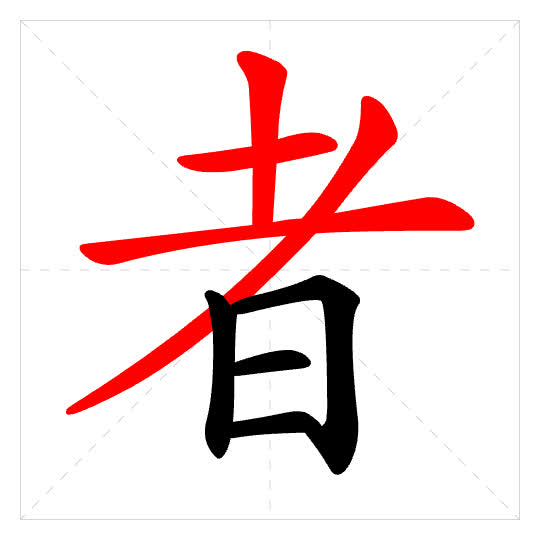
Basic Meaning
part
Forms nouns from adjectives or verbs (e.g., 读者 'reader').
similar to '-er' or '-or' in English
用在形容词、动词或形容词性词组、动词性词组后面,表示有此属性或做此动作的人或事物。
Words:
强者老者弱者读者胜利者未渡者卖柑者学者患者
Sentences:
- 这位老者每天在公园散步。This elderly person walks in the park every day.
- 胜利者获得了奖杯。The winner received the trophy.
- 读者们很喜欢这本新书。Readers really like this new book.
n
Common in formal or professional contexts to denote occupations or beliefs (e.g., 教育工作者 'educator').
Used after a type of work or ideology to indicate a person engaged in that work or believing in that ideology.
用在某项工作、某种主义后面,表示从事此项工作或信仰这种主义的人。
Words:
文艺工作者教育工作者医务工作者爱国主义者理想主义者
Sentences:
- 医务工作者在医院工作很辛苦。Medical workers have a tough job at the hospital.
- 理想主义者相信世界会变得更好。Idealists believe the world will become better.
part
Often used in comparisons or lists to specify items (e.g., 前者 'the former', 后者 'the latter').
Particle used after numbers like '二' (two), '三' (three), or '数' (several) to refer to things mentioned earlier.
助词,用在“二、三、数”等数词后,指上文所说的几件事。
Words:
后者前者二者
Sentences:
- 苹果和香蕉,我更喜欢后者。Between apples and bananas, I prefer the latter.
- 这两本书,前者是小说,后者是历史书。Of these two books, the former is a novel, and the latter is a history book.
Writing & Component
Radical耂
Structuretop_bottom
Stroke Count8
Strokes一丨一丿丨𠃍一一