
等等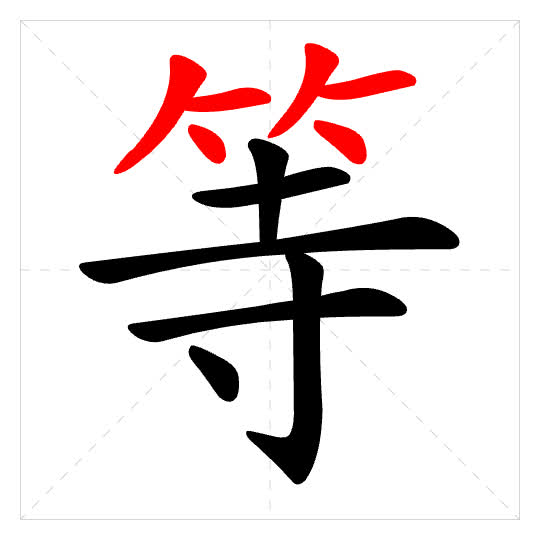
Basic Meaning
n
Often used in mathematical or formal comparisons.
equal (in quantity, status, or degree)
数量一般大,地位或程度一般高。
Synonyms:
Sentences:
- 这两个袋子重量相等。The weight of these two bags is equal.
- 在我们的团队里,所有成员都是平等的。In our team, all members are equal.
n
Indicates a category or tier in a hierarchy.
rank; grade; level
级位,程度的分别。
Words:
优等等级同等高等教育低等
Sentences:
- 这所大学提供高等教育。This university provides higher education.
- 产品质量分为优等、一等和合格等几个等级。Product quality is divided into several grades: superior, first-class, and qualified.
n
A somewhat formal or classical usage for 'type'.
kind; sort; type
种;类。
Sentences:
- 此等事情,不必过于担心。This kind of matter need not be worried about too much.
q
Used before nouns like 'product' or 'cabin' to specify its grade.
(measure word) indicating a grade or class
用于等级。
Words:
次等品三等功二等舱
Sentences:
- 他买的是二等舱的船票。He bought a second-class cabin ticket.
- 超市在处理次等品,价格很便宜。The supermarket is selling off substandard products at very cheap prices.
part
The first usage (我等) is classical/literary. The second (列举未尽) is very common in modern writing and speech.
(particle) ①<literary> placed after personal pronouns or nouns referring to people to indicate plural. ②used to indicate a non-exhaustive list (can be reduplicated). ③used to end a list.
①〈书〉用在人称代词或指人的名词后面,表示复数。②表示列举未尽(可以叠用)。③列举后煞尾。
Words:
我等此等
Sentences:
- 书架上摆着小说、杂志、地图等等。On the bookshelf are novels, magazines, maps, and so on.
- 我去超市买了苹果、香蕉、橙子等水果。I went to the supermarket and bought apples, bananas, oranges, and other fruits.
- 中国、美国、俄罗斯等国参加了会议。China, the United States, Russia, and other countries attended the conference.
v
The most common and basic verb sense.
to wait (for); to await
等候;等待;等到。
Words:
等人等车稍等
Sentences:
- 请稍等,他马上就来。Please wait a moment, he'll be right here.
- 我在车站等车等了半个小时。I waited for the bus at the station for half an hour.
- 我们等雨停了再走吧。Let's wait until the rain stops before we go.
Writing & Component
Radical竹
Structuretop_bottom
Stroke Count12
Strokes丿一丶丿一丶一丨一一亅丶