
秋秋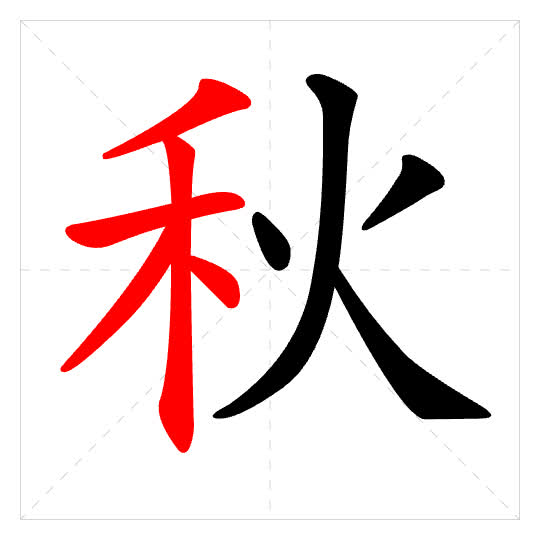
Basic Meaning
n
The most common, neutral term for the season.
autumn; fall
秋季,一年四季的第三季。
Words:
Sentences:
- 北京的秋天非常美丽。Beijing's autumn is very beautiful.
- 秋风吹来,感觉很凉爽。The autumn wind blows in, and it feels very cool.
n
Often used in agricultural contexts. The terms '麦秋' and '大秋' are specific to certain harvest periods.
harvest season; time for crops to ripen
庄稼成熟的时期。
Words:
麦秋大秋
Sentences:
- 现在是麦秋,地里正忙着收割。It's the wheat harvest season now, and they are busy reaping in the fields.
n
An archaic or literary usage. Most commonly seen in set phrases.
(literary) year
〈书〉指一年的时间。
Words:
千秋万岁千秋万代千秋万载三秋千秋
Sentences:
- 他们祝愿公司生意兴隆,千秋万代。They wished the company prosperity for a thousand years and ten thousand generations.
n
Has a negative or critical connotation. Primarily used in the set phrase '多事之秋'.
period; time (often referring to a troubled or critical period)
指某个时期(多指不好的)。
Words:
多事之秋有事之秋
Sentences:
- 那是一个多事之秋,充满了挑战。That was a troubled time, full of challenges.
The word '秋' on its own is rarely used to mean 'swing'. The full word is **秋千** (qiu1 qian1).
see "qiu1 qian1" (swing)
见“秋千”。运动和游戏用具,在木架或铁架上系两根长绳,下面拴上一块板子。人在板上利用脚蹬板的力量在空中前后摆动。
Words:
荡秋千秋千
Sentences:
- 孩子们在公园里开心地荡秋千。The children are happily swinging in the park.
- 你能帮我推一下这个秋千吗?Can you give this swing a push for me?
Writing & Component
Radical禾
Structureleft_right
Stroke Count9
Strokes丿一丨丿丶丶丿丿㇏