
票票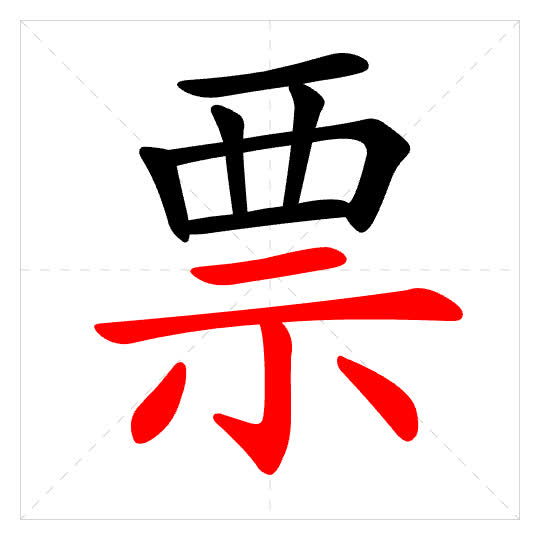
Basic Meaning
n
Used for various types of tickets and documents.
ticket; stamp; ballot; a slip of paper used as a certificate or voucher.
用来作为凭证的纸片。
Sentences:
- 我买了两张明天晚上的电影票。I bought two movie tickets for tomorrow evening.
- 请出示您的车票。Please show your train ticket.
- 这次投票选举非常重要。This vote (election) is very important.
n
Specifically used in contexts like 票友 and 玩票.
amateur theater performance; referring to non-professional opera performance.
指非职业性的戏曲表演。
Words:
票友玩票
Sentences:
- 我爷爷年轻时是个京剧票友。My grandfather was an amateur Peking Opera enthusiast when he was young.
- 他唱歌只是玩票,不是专业歌手。He sings just for fun, not as a professional singer.
q
A colloquial measure word used in business.
(quantifier) for a batch of goods or a business transaction.
用于货物、生意。
Words:
一票货一票买卖
Sentences:
- 我们刚谈成了一票大买卖。We just closed a big business deal.
- 仓库里还有一票货没发出去。There's still a batch of goods in the warehouse that hasn't been shipped out.
n
Specifically used in terms like 绑票儿, 撕票儿. Often used with the diminutive suffix 儿 in certain contexts.
(–儿) hostage (kidnapped person held for ransom).
(–儿)被绑匪挟(xié)持借以勒取赎金的人质。
Words:
绑票儿撕票儿赎票撕票绑票
Sentences:
- 电影里,绑匪威胁要撕票。In the movie, the kidnapper threatened to kill the hostage.
- 家人花了很大一笔钱才把被绑票的孩子赎回来。The family spent a huge amount of money to ransom the kidnapped child.
Writing & Component
Radical示
Structuretop_bottom
Stroke Count11
Strokes一丨𠃍丨丨一一一亅丿丶