
礼礼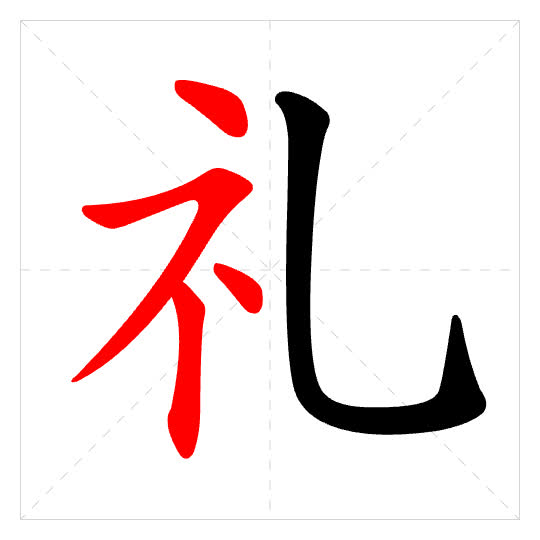
Basic Meaning
n
Often refers to specific events like weddings or funerals, based on social customs and moral concepts.
ritual; ceremony; formal observance
由一定社会的道德观念和风俗习惯形成的为大家共同遵行的仪节。
Words:
婚礼丧礼葬礼典礼祭礼
Sentences:
- 他们的婚礼非常隆重。Their wedding ceremony was very grand.
- 葬礼上,大家都穿着黑色的衣服。At the funeral, everyone wore black clothes.
n
Used to describe respectful speech or behavior in social interactions.
courtesy; polite gesture; respectful action
表示尊敬的言语或动作。
Words:
彬彬有礼礼节敬礼行礼行注目礼
Sentences:
- 他很有礼貌,总是彬彬有礼。He is very polite and always courteous.
- 学生们向老师行注目礼。The students saluted the teacher with a gaze of respect.
n
Commonly used in contexts involving giving or receiving gifts for celebrations, respect, or thanks.
gift; present
礼物,为表示庆贺、敬意或感谢而赠送的物品。
Words:
送礼献礼大礼包礼单厚礼
Sentences:
- 我送了一份礼物给朋友作为生日礼。I gave a gift to my friend as a birthday present.
- 公司发了一个大礼包给员工。The company gave a big gift package to the employees.
v
Formal or literary usage, often in set phrases like 以礼相待.
to respect; to treat with courtesy
〈书〉尊敬;以礼相待。
Words:
以礼相待礼贤下士礼贤者礼遇
Sentences:
- 我们应该以礼相待每一位客人。We should treat every guest with courtesy.
- 这位领导很礼贤下士。This leader respects and treats talented people with courtesy.
n
Refers to ancient Chinese behavioral rules and ethical standards, often in historical or cultural contexts.
code of conduct; moral norms
我国古代制定的行为准则和道德规范。
Words:
礼义廉耻封建礼教
Sentences:
- 古代社会强调礼义廉耻。Ancient society emphasized codes of conduct like propriety, righteousness, integrity, and shame.
- 封建礼教对女性有很多限制。Feudal moral norms imposed many restrictions on women.
Writing & Component
Radical礻
Structureleft_right
Stroke Count5
Strokes丶㇇丨丶乚