
着着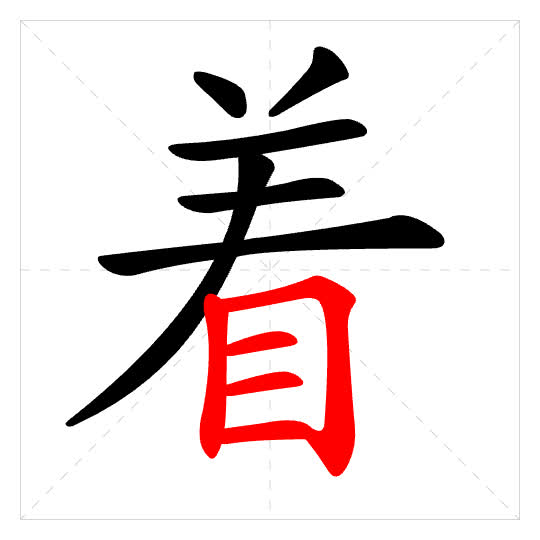
Basic Meaning
part
This is the primary usage of 着(zhe) to indicate "-ing".
Indicates the progressive aspect. Placed after a verb to show the action is ongoing.
时态助词。用在动词后,表示动作正在进行。
Words:
刬着倒着跟着记着看着
Sentences:
- 他看着窗外,想着事情。He is looking out the window, thinking about things.
- 我正听着音乐呢。I am listening to music.
part
Describes a maintained posture, condition, or result. For example, 坐着 (sitting), 睡着 (asleep).
Indicates a state of being or the continuation of a state.
表示处在某种状态或状态的持续。
Words:
穿着睡着坐着躺着放着
Sentences:
- 她穿着一条红裙子。She is wearing a red dress.
- 书在桌上放着。The book is placed on the table.
part
Used for commands or strong advice, similar to "do...!" e.g., 听着! (Listen!)
Used after a verb or degree adjective to strengthen an imperative or exhortative tone.
用在动词或表示程度的形容词后面,加强命令或嘱咐的语气。
Sentences:
- 你听着,这件事很重要!You listen, this matter is very important!
- 快着点儿,我们要迟到了!Hurry up, we're going to be late!
part
Turns verbs into prepositions like 顺着 (along), 朝着 (towards).
Added after certain verbs to form prepositions.
加在某些动词后面,构成介词。
Words:
顺着朝着照着为着沿着
Sentences:
- 我们顺着这条路一直走。We walk straight along this road.
- 他朝着我微笑。He smiled towards me.
part
Describes how the second action is performed, e.g., 笑着说话 (speak while smiling).
In serial-verb constructions, placed after the first verb to indicate manner, means, or attitude.
用在连动句第一个谓语动词后,表示方式、手段、情态等。
Sentences:
- 学生们跑着去操场。The students went to the playground running.
Writing & Component
Radical目
Structuretop_bottom
Stroke Count11
Strokes丶丿一一一丿丨𠃍一一一