
皇皇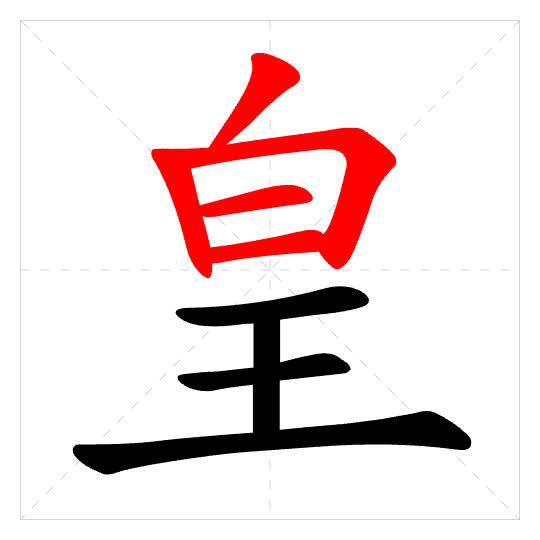
Basic Meaning
n
Historically refers to emperors and kings. Today, related terms like 皇后, 皇帝 are often used to describe historical figures or in historical dramas. It is a formal term.
emperor; sovereign; monarch
君主;皇帝。
Words:
三皇五帝秦皇汉武皇后皇帝皇位
Sentences:
- 秦始皇是中国历史上第一位皇帝Qin Shi Huang was the first emperor in Chinese history.
- 她在这部电影里扮演皇后She plays the empress in this movie.
- 皇位继承人需要接受严格的教育The heir to the throne needs to receive rigorous education.
adj
This sense (meaning 'grand') is formal and literary, mostly found in classical Chinese texts and historical literary contexts. In modern language, it is rarely used alone; it's typically part of fixed phrases like 皇皇巨著.
grand; magnificent; majestic
〈书〉大,盛大。
Words:
皇天后土皇皇巨著
Sentences:
- 这是一部皇皇巨著,内容十分丰富This is a grand masterpiece, with extremely rich content.
- 古人对皇天后土充满敬畏Ancient people were full of reverence for Heaven and Earth.
Writing & Component
Radical白
Structuretop_bottom
Stroke Count9
Strokes丿丨𠃍一一一一丨一