
状状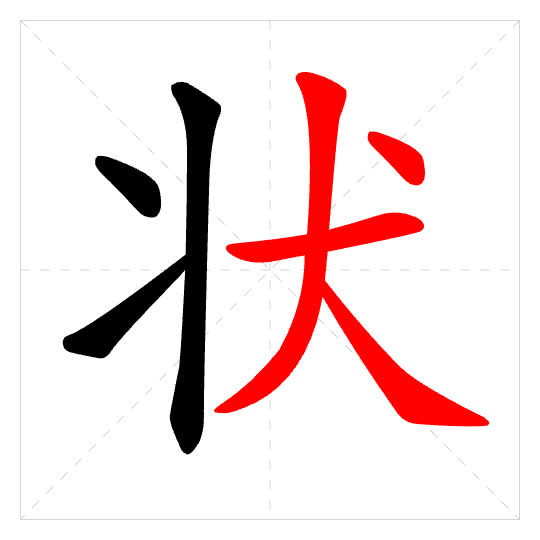
Basic Meaning
n
常与其他汉字组合成词,如“状态”、“形状”。
shape; form; state; condition
形状;状态。
Sentences:
- 这个山洞的入口形状很特别。The shape of this cave entrance is very unusual.
- 他的情绪状态看起来很稳定。His emotional state looks very stable.
n
常用来描述抽象情况,如“现状”、“症状”。
condition; situation; circumstances
状况。
Words:
罪状情状现状症状惨状
Sentences:
- 病人的症状已经减轻了很多。The patient's symptoms have improved a lot.
- 我们要努力改变这种落后的现状。We must work hard to change this backward situation.
n
多指记录事件的文书,如“供状”、“行状”,在现代汉语中“行状”不常用。
written account; document (that records or describes events)
陈述事件或记载事迹的文字。
Words:
供状行状
Sentences:
- 他向警察提交了一份详细的供状。He submitted a detailed confession to the police.
n
法律用语,主要指“诉状”。
lawsuit; plaint
指诉状。
Words:
行状状纸告状
Sentences:
- 村民写好诉状,决定去法院告状。The villagers wrote a plaint and decided to file a lawsuit at the court.
n
指褒奖或委任的凭证,常见的有“奖状”。
certificate; document (of commendation or appointment)
褒奖、委任等的凭证。
Words:
状子状告诉状奖状委任状
Sentences:
- 他在比赛中获奖,得到了一张精美的奖状。He won a prize in the competition and received a beautifully crafted certificate.
Writing & Component
Radical犬
Structuretop_bottom
Stroke Count7
Strokes丶㇀丨一丿㇏丶