
烦烦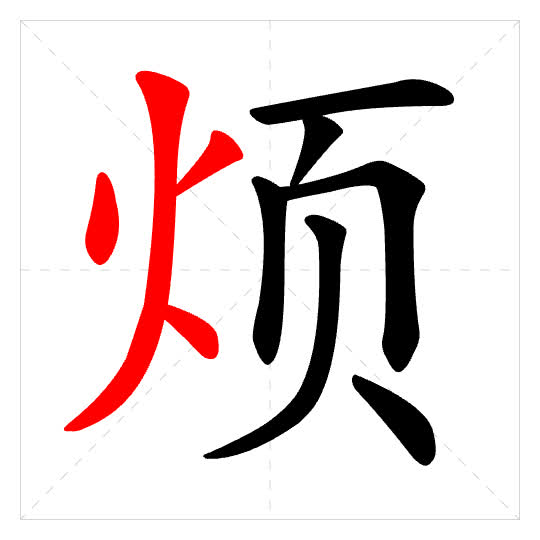
Basic Meaning
adj
Describes a state of mental unease or agitation, often due to stress or multiple small annoyances.
(feeling) annoyed; irritated; restless; vexed.
烦闷,烦躁。
Words:
烦恼烦躁烦心烦乱心烦意乱
Sentences:
- 这么多工作还没做完,真让人心烦。So much work is still unfinished; it's really vexing.
- 天气太热了,他有点烦躁。The weather is too hot; he's feeling a bit irritable.
adj
Often used to describe a feeling of impatience or dislike due to repetition or monotony. Can be combined with words like 不 (bù) to form 不耐烦 (bú nàifán), meaning 'impatient'.
bored; fed up; tired of something or someone.
厌烦,厌恶。
Words:
耐烦腻烦百问不烦烦人不耐烦
Sentences:
- 他总是问同样的问题,我都听烦了。He always asks the same questions; I'm tired of hearing them.
- 请别说了,我已经很不耐烦了。Please stop talking; I'm already very impatient.
v
A transitive verb meaning to cause someone to feel annoyed or bothered. The object is usually a person.
to bother; to annoy; to trouble (someone).
使厌烦。
Sentences:
- 别总用小事来烦我。Don't always bother me with trivial matters.
- 孩子的哭声把妈妈烦得睡不着觉。The child's crying annoyed the mother so much she couldn't sleep.
v
Used as a polite formula when asking someone to do something, often in fixed phrases like 烦请 (fán qǐng) or 烦劳 (fán láo). It softens the request.
(to trouble you) with a request; to ask for a favor (polite).
烦劳。
Words:
有事相烦敬烦劳烦烦劳烦请
Sentences:
- 烦您帮我把这个包裹寄出去,谢谢。Could I trouble you to help me send this parcel? Thank you.
- 烦请各位明天准时参加会议。We kindly request everyone to attend the meeting on time tomorrow.
Writing & Component
Radical火
Structureleft_right
Stroke Count10
Strokes丶丿丿丶一丿丨𠃍丿丶