
激激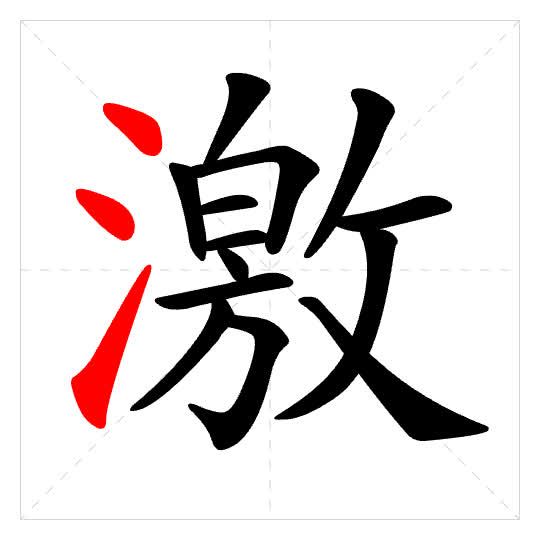
Basic Meaning
v
Often used in contexts involving physical impact or emotional arousal, e.g., 激荡 (turbulence) or 激励 (motivate).
to splash or pour water rapidly; to provoke or stir up emotions
水冲击或急速浇淋。使发作,使人的感情冲动。
Words:
激荡激起冲激激浊扬清激励
Sentences:
- 海浪激荡着岩石,发出巨大的声音。The waves splash against the rocks, making a loud sound.
- 他的演讲激起了大家的热情。His speech stirred up everyone's enthusiasm.
v
Typically refers to health issues caused by a sudden cold stimulus, less common in modern usage.
to fall ill from sudden exposure to cold water
因突然受到冷水刺激而生病。
Sentences:
- 他昨天游泳时被冷水激了,现在有点感冒。He got sick from the cold water while swimming yesterday and now has a slight cold.
adj
Used as an adjective to describe speed or intensity, e.g., 激增 (sharp increase) or 激战 (fierce battle).
rapidly; intense or drastic
急速地。急剧的,强烈的。
Words:
激增激涨激战激变偏激
Sentences:
- 最近房价激增,很多人买不起房子。Recently, housing prices have increased sharply, and many people can't afford to buy a house.
- 这场激战持续了好几个小时。This fierce battle lasted for several hours.
v
Focuses on emotional states, often positive or passionate, e.g., 激动 (excited) or 感激 (grateful).
to be emotionally stirred or agitated
感情冲动。
Words:
激动感激慷慨激昂激于义愤激昂
Sentences:
- 听到好消息,她非常激动。Hearing the good news, she was very excited.
- 我很感激你的帮助。I am very grateful for your help.
Writing & Component
Radical氵
Structureleft_middle_right
Stroke Count16
Strokes丶丶㇀丿丨𠃍一一丶一𠃌丿丿一丿㇏