
济济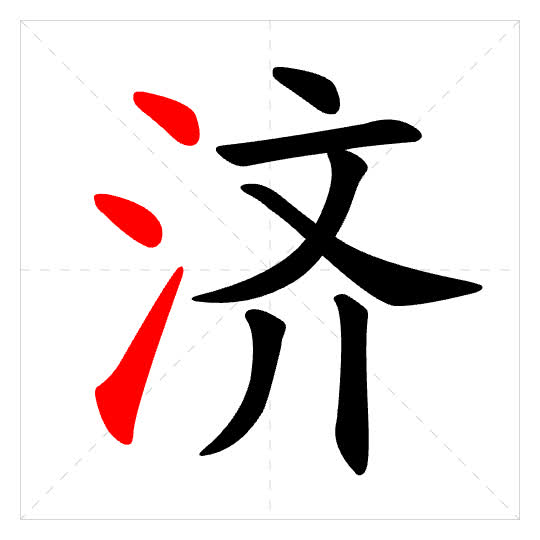
Basic Meaning
v
现代汉语中,此义项通常不单独使用,多见于成语、古文或历史地名如“济水”。
to cross a river; to ford.
过河;渡。
Words:
同舟共济济水济运济涉济河
Sentences:
- 在古代,渡河是一件很困难的事,人们常说“同舟共济”In ancient times, crossing a river was a very difficult thing, and people often spoke of 'helping each other in the same boat'.
v
常用于“救济”、“济助”等词汇中,指物质或行动上的帮助以渡过难关,带有“渡过困难”的隐喻色彩。
to help those in distress.
对困苦的人加以帮助。
Words:
救济济助济世赈济扶危济困
Sentences:
- 地震发生后,许多组织都参与了救济灾民的工作。After the earthquake occurred, many organizations participated in the work of helping the victims.
- 他一生致力于扶危济困,帮助了许多人。He devoted his life to helping those in danger and distress, assisting many people.
v
多用于成语或固定搭配,表示使事情成功或得到补益,如“无济于事”、“刚柔相济”。
to help; to be beneficial.
帮助;补益。
Words:
假公济私刚柔相济无济于事宽猛相济济事
Sentences:
- 光着急是无济于事的,我们必须想办法解决问题。Just being anxious is of no help; we must find a way to solve the problem.
- 管理公司需要刚柔相济的手段。Managing a company requires a combination of firmness and gentleness.
Writing & Component
Radical氵
Structureleft_right
Stroke Count9
Strokes丶丶㇀丶一丿㇏丿丨