
流流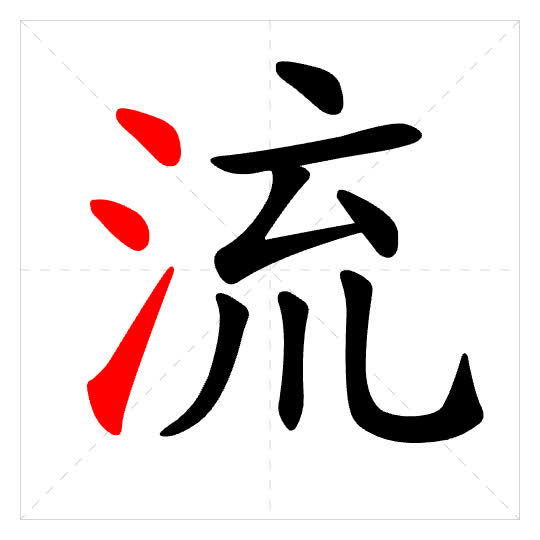
Basic Meaning
v
Often used for natural or bodily fluids like water, sweat, or blood.
to flow (of liquids); to move fluidly
液体移动;流动。
Words:
漂流奔流流汗流血流水不腐
Synonyms:
淌
Sentences:
- 汗水从他的额头流下来。Sweat flows down from his forehead.
v
Used metaphorically for things that move in a fluid manner, such as sand or stars.
to flow like a liquid
像液体一样流动。
Words:
流浪流沙流星流通流转
Sentences:
- 沙漠里的流沙很危险。The quicksand in the desert is very dangerous.
- 夜晚可以看到流星划过天空。At night, you can see meteors streaking across the sky.
v
Commonly refers to the transmission of information, trends, or reputations.
to spread; to pass down
传下来;传播。
Words:
Sentences:
- 这个故事在民间流传了很久。This story has been passed down among the people for a long time.
- 这首歌现在很流行。This song is very popular now.
n
Specifically denotes flowing water in rivers or similar bodies.
river water; stream
指江河的流水。
Words:
河流洪流急流支流湍流
Sentences:
- 这条河流的水很急。The water in this river is very fast.
- 洪水形成了一股巨大的洪流。The flood formed a huge torrent.
n
Used for abstract or physical flows, such as electricity, air, or crowds.
something that flows like water
像水流那样流动的东西。
Words:
电流气流人流寒流暖流
Sentences:
- 电流通过电线传输能量。Electric current transmits energy through wires.
- 地铁站里人流量很大。The flow of people in the subway station is very heavy.
v
Usually has a negative connotation, implying decline or neglect.
to degenerate; to tend toward a bad direction
趋向坏的方面。
Words:
流落流民流于形式放任自流
Sentences:
- 如果不努力,事情就会流于形式。If you don't work hard, things will become mere formalities.
- 他因为失业而流落街头。He ended up homeless on the streets due to unemployment.
v
Historical usage; in modern contexts, it can refer metaphorically to exile or isolation.
to banish; to exile (as an old punishment)
旧时的一种刑罚,把人送到荒远的地方去,充军。
Words:
流放流徙流戍
Sentences:
- 在古代,罪犯常被流放到边疆。In ancient times, criminals were often exiled to the borderlands.
- 他被流放到一个偏远的小岛。He was banished to a remote island.
n
Often used in social or professional contexts to denote groups or levels.
faction; class; rank
派别;等级。
Words:
一流上流名流女流三教九流
Sentences:
- 他是一流的科学家。He is a top-class scientist.
- 这个社区住着很多社会名流。Many social elites live in this community.
Writing & Component
Radical氵
Structureleft_right
Stroke Count10
Strokes丶丶㇀丶一𠃋丶丿丨乚