
沙沙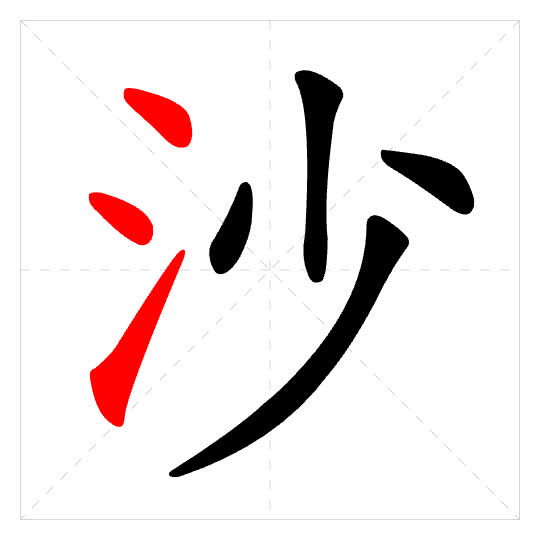
Basic Meaning
n
Often used in the form 沙子, referring to the material on beaches or in deserts.
sand (very fine, loose rock particles).
(~子)非常细碎的石粒。
Words:
沙子沙涩泥沙沙土沙滩
Sentences:
- 孩子们喜欢在沙滩上堆沙堡。Children love to build sandcastles on the beach.
- 他的鞋子里进了很多沙子。A lot of sand got into his shoes.
n
Describes things that have a texture, appearance, or behavior similar to sand. For example, sugar can feel 'sandy'.
something sand-like; granular substance.
像沙的东西。
Words:
沙粒感沙状物沙尘状沙化现象沙雾沙化层
Sentences:
- 这种白糖质量不好,有沙粒感。This white sugar is of poor quality; it has a gritty, sand-like texture.
adj
Primarily describes a person's voice, often due to a cold, overuse, or illness (e.g., 声音沙哑). It usually has a neutral or slightly negative connotation.
(of a voice) hoarse, husky; not clear or crisp.
(嗓音)不清脆,不响亮。
Words:
沙哑声沙哑嗓音沙哑呢喃沙哑低吟喉咙沙哑沙哑呼唤
Sentences:
- 他感冒了,说话声音很沙哑。He has a cold, and his speaking voice is very hoarse.
- 歌手唱了太久,喉咙都沙哑了。The singer sang for too long, and now his throat is hoarse.
Writing & Component
Radical氵
Structureleft_right
Stroke Count7
Strokes丶丶㇀丨丿丶丿