
汉汉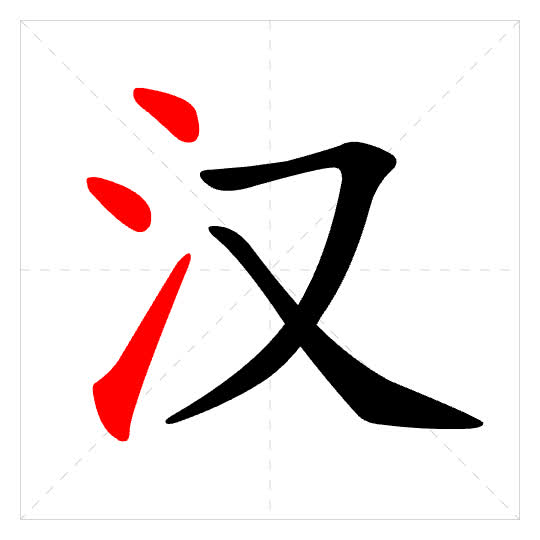
Basic Meaning
n
A literary or poetic term, rarely used in everyday conversation. Appears in classical phrases like 云汉, 天汉.
the Milky Way; the galaxy.
指银河。
Words:
云汉天汉河汉银汉星汉
Synonyms:
Sentences:
- 古诗中常用“星汉”来指代银河In ancient poetry, 'star river' is often used to refer to the Milky Way.
n
A major historical dynasty in China, foundational to Chinese culture and identity. Often referenced in historical contexts.
the Han Dynasty (206 BCE–220 CE), divided into Western Han and Eastern Han.
朝代,公元前206一公元220,分为西汉和东汉。刘邦所建,建都长安(今陕西西安),史称前汉或西汉。公元25年,刘秀重建汉朝,建都洛阳,史称后汉或东汉。
Words:
东汉西汉汉朝后汉
Sentences:
- 汉朝是中国历史上一个非常强大的朝代。The Han Dynasty was a very powerful dynasty in Chinese history.
- 丝绸之路在汉武帝时期得到发展。The Silk Road developed during the reign of Emperor Wu of Han.
n
Refers to the majority ethnic group in China. Forms common compound words like 汉字 (Chinese characters), 汉语 (Chinese language).
the Han ethnic group; the Han Chinese.
汉族,我国人口最多的民族。分布在全国各地。
Sentences:
- 汉族是中国人口最多的民族。The Han ethnic group is the largest ethnic group in China.
- 我正在学习汉语。I am learning Chinese.
n
Informal term for a man, often used in colloquial speech. Can be neutral or carry connotations of toughness (e.g., 好汉 'hero'). The suffix 子 is often added as 汉子.
man; fellow; guy.
(~子)男人,男子。
Words:
老汉好汉彪形大汉汉子铁汉
Synonyms:
Sentences:
- 那个汉子干活很卖力。That guy works very hard.
- 他真是个好心肠的老汉。He is really a kind-hearted old man.
Writing & Component
Radical氵
Structureleft_right
Stroke Count5
Strokes丶丶㇀㇇㇏