
比比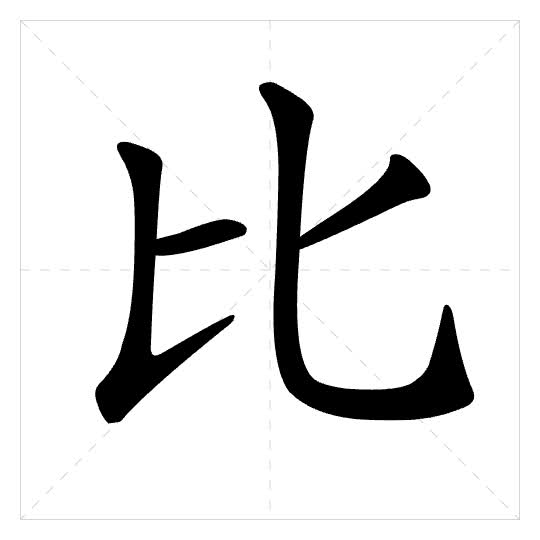
Basic Meaning
v
Often used to compare people, skills, or things. In the structure 'A 比 B [adj]', it means 'A is more [adj] than B'.
to compare; to compete
比较,较量。
Words:
Sentences:
- 明天我们班有一场篮球比赛。Our class has a basketball game tomorrow.
- 让我们来比一比谁跑得更快。Let's have a competition to see who runs faster.
v
Often used in comparative or rhetorical contexts. Can appear in structures like '比得上' (can compare to) or '比不上' (cannot compare to). The example '今非昔比' is a classic idiom and can be mentioned as such.
to compare favorably to; to be on a par with
能够相比;比得上。
Words:
今非昔比近邻比亲坚比金石
Sentences:
- 这里的景色真是今非昔比,漂亮多了。The scenery here is nothing like before; it's much more beautiful now. (Uses the idiom 今非昔比)
- 在质量方面,这个产品比得上那些国际品牌。In terms of quality, this product can compare to those international brands.
v
Often used as '比画' (bi3 hua).
to gesture; to gesticulate
比画。
Words:
连说带比比画
Sentences:
- 他不知道那个词怎么说,只好用手比画。He didn't know how to say that word, so he had to gesture with his hands.
- 他一边说,一边比,希望能让我们明白。He talked and gestured, hoping to make us understand.
v
Often used in words like '比喻' (metaphor), '比方' (analogy).
to metaphor; to analogize
比方,模拟,做譬喻。
Words:
比喻打比方比拟比作
Sentences:
- 老师经常用比喻来解释复杂的概念。The teacher often uses metaphors to explain complex concepts.
- 我们可以把地球比作一个蓝色的水球。We can metaphorize the Earth as a blue water ball.
n
A mathematical term.
ratio
两个数相比较,前项和后项的关系是被除数和除数的关系,如3∶5,3是前项,5是后项,比值是3/5。
Words:
比值比例
Sentences:
- 这幅图的长宽比例是四比三。The aspect ratio of this picture is four to three.
- 这个班级男生和女生的比值大约是二比一。The ratio of boys to girls in this class is about two to one.
v
Used to state scores in games or competitions. E.g., '3 比 2' means 'three to two'.
to (in a score)
表示比赛双方得分的对比。
Words:
三比二比分
Sentences:
- 昨晚的足球赛,主队以二比一获胜。In last night's soccer match, the home team won two to one.
- 现在的比分是多少?What's the current score?
prep
A key preposition in comparative sentences. Structure: Noun A + 比 + Noun B + Adjective.
than
引入比较性状和程度的对象。
Sentences:
- 她比我高。She is taller than me.
- 坐地铁比开车快多了。Taking the subway is much faster than driving.
- 这部电影比我想象的更有趣。This movie is more interesting than I imagined.
v
Literary or formal. Appears in words like '比邻' (neighbor).
<literary> to be close to; to be next to
〈书〉紧靠;挨着。
Words:
比肩比邻鳞次栉比
Sentences:
- 他们两家是比邻而居。Their two families live as neighbors.
- 这里的商铺鳞次栉比,非常热闹。The shops here are arranged in close order, row upon row, making it very lively.
Writing & Component
Radical比
Structureleft_right
Stroke Count4
Strokes一𠄌丿乚