
每每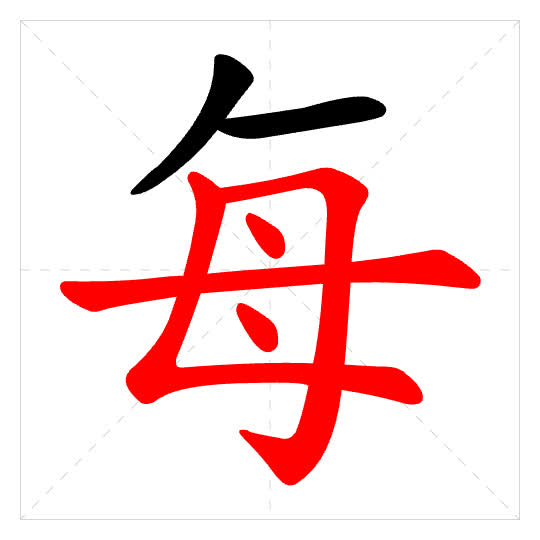
Basic Meaning
pron
Often used with measure words or time words, e.g., 每个 (mei3 ge4), 每天 (mei3 tian1).
every; each (pronoun, referring to any one or group in a whole)
代词,指全体中的任何一个或一组。
Words:
每人每次每时每刻每回每天
Sentences:
- 每人都有自己的梦想Every person has their own dream.
- 我每天喝一杯咖啡I drink a cup of coffee every day.
- 每次考试前,他都很紧张He gets very nervous before every exam.
adv
Common in patterns like 每逢 (mei3 feng2) or with time expressions to show recurrence.
every time; regularly (adverb, indicating a repeated action occurring at regular intervals)
表示同一动作行为有规律地反复出现。
Words:
每逢每每每战必胜
Sentences:
- 每逢周末,我们都会去公园散步Every weekend, we go for a walk in the park.
- 她每战必胜,是个优秀的运动员She wins every competition; she is an excellent athlete.
adv
Used in more formal or literary contexts, similar to 常常 (chang2 chang2).
often; frequently (adverb, indicating a habitual or common occurrence)
每每;往往。
Words:
每常每每
Sentences:
- 她每每在会议上提出好建议She frequently offers good suggestions at meetings.
Writing & Component
Radical母
Structuretop_bottom
Stroke Count7
Strokes丿一㇄𠃌丶一丶