
欢欢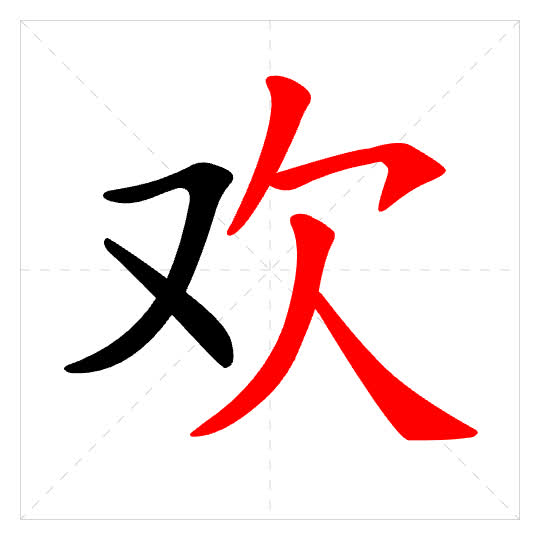
Basic Meaning
adj
A core and very common adjective for happiness.
happy; joyful; delighted
快乐,高兴。
Words:
Antonyms:
悲
Sentences:
- 听到这个好消息,大家都非常欢喜。Everyone was delighted to hear this good news.
- 孩子们在公园里玩得很欢乐。The children are playing joyfully in the park.
- 我们欢送这位即将退休的老师。We held a joyful send-off for the teacher who is about to retire.
adj
Often used in set phrases describing relationships or the result of an encounter.
harmonious; on good terms; friendly
和美;和好。
Words:
握手言和不欢而散
Sentences:
- 谈判最后没有结果,双方不欢而散。The negotiations ended without a result, and both parties parted on unfriendly terms.
- 老朋友见面,气氛总是很欢洽。When old friends meet, the atmosphere is always very harmonious.
adj
Primarily a dialect usage. In standard Mandarin, use words like 起劲 or 活跃.
(dialectal) energetic; lively
〈方〉起劲;活跃。
Sentences:
- 过年了,小家伙们玩得可欢了!It's the New Year, and the kids are playing so energetically!
adj
Often appears in literary or formal expressions, especially describing gaining someone's affection.
fond of; loved
喜爱。
Words:
博取欢心
Sentences:
- 他想尽办法来博取她的欢心。He tried every possible way to win her favor.
- 这幅画深得收藏家的欢爱。This painting is much loved by collectors.
n
Used as a noun, typically in the context of romantic partners. Often appears in phrases like 新欢 (new lover).
someone you love (often referring to a lover)
指所喜爱的人(多指情人)。
Words:
另有新欢新欢
Sentences:
- 他和他的新欢一起去旅行了。He went on a trip with his new lover.
- 传闻他已有了新欢,抛弃了旧爱。Rumors say he has a new lover and abandoned his old love.
Writing & Component
Radical欠
Structureleft_right
Stroke Count6
Strokes㇇丶丿㇇丿㇏