
格格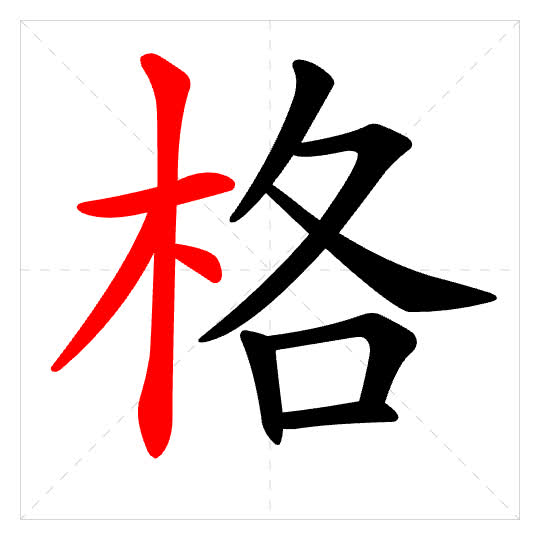
Basic Meaning
n
Often refers to physical squares or grids, like on paper. Can be combined with '子' or '儿' (ge2zi, ge2er) to form the common word '格子'.
cell; grid; square
(–子、~儿)划分成的空栏或框子。
Words:
方格格子格子纸打格子方格儿布
Sentences:
- 请在格子纸上写字Please write on the grid paper.
- 表格的第一格需要填你的姓名The first cell of the form requires your name.
- 这款衬衫是方格儿This shirt is made from checkered cloth.
n
Often used in words related to rules, standards, or requirements (如 规格, 合格).
standard; specification; format
规格;格式。
Words:
Sentences:
- 这件产品的规格不符合我The specifications of this product do not meet our requirements.
- 他考试及格He passed the exam.
n
Used in words describing moral or personal qualities, or artistic style (如 人格, 风格).
quality; character; style
品质;风度。
Words:
Sentences:
- 他的人格非常His character is very noble.
- 这座建筑的风格很The style of this building is very unique.
v
This meaning is often found in historical or martial contexts, as in the word 格斗. Modern use is relatively limited.
to strike; to fight
击,打。
Words:
格杀格斗
Sentences:
- 电影里有一段精彩的格There is an exciting combat scene in the movie.
v
This is a classical, literary usage (〈书〉), most famously seen in the phrase 格物致知 from ancient Chinese philosophy.
to investigate; to study
〈书〉推究。
Words:
格物致知
Sentences:
- “格物致知”是中国古代'Investigating things to acquire knowledge' is an important philosophical concept from ancient China.
n
A term borrowed into Chinese grammar to describe grammatical cases found in languages like Russian or German.
case (grammatical)
某些语言中名词(有的包括代词、形容词)的语法范畴,用词尾变化来表示它和别的词之间的语法关系。例如俄语的名词、代词、形容词都有六个格。
Words:
主格宾格
Sentences:
- 在俄语中,名词有六个格,比如主In Russian, nouns have six cases, such as the nominative case and the accusative case.
- 英语没有复杂的格English does not have a complex case system.
Writing & Component
Radical木
Structureleft_right
Stroke Count10
Strokes一丨丿丶丿㇇㇏丨𠃍一