
来来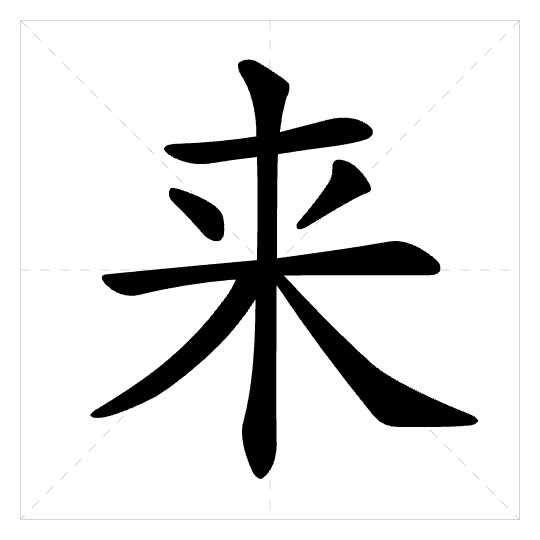
Basic Meaning
v
The most basic meaning of 来, indicating movement towards the speaker or a reference point.
to come (towards the speaker); to arrive (here), opposite of 'to go'
从别的地方到说话人所在的地方,由另一方面到这一方面,跟“去”相对。
Words:
来宾来客来信明来暗往来往来源
Synonyms:
回归
Sentences:
- 我朋友明天坐火车来北京。My friend is coming to Beijing by train tomorrow.
- 你的来信我收到了。I have received your letter.
v
(of problems, events, etc.) to arise; to happen; to come about
(问题、事情等)发生;来到。
Words:
Sentences:
- 新的问题总是会来的,我们要做好准备。New problems will always arise; we need to be prepared.
v
Used conversationally to make a general suggestion or offer, e.g., '来一盘棋' (Let's have a game of chess).
to do; to perform (replaces a more specific verb in context)
做某个动作(代替意义更具体的动词)。
Words:
胡来来一盘棋来一杯酒来份套餐
Sentences:
- 天气真热,我们来杯冰水吧。It's really hot; let's have a glass of ice water.
- 别乱动,你不能这样胡来。Don't mess around; you can't act recklessly like this.
v
Often follows another verb, e.g., 合得来 (to get along).
(potential complement) used with 得 or 不 to indicate capability, possibility, or compatibility
趋向动词。跟“得”或“不”连用,表示有能力或没有能力,也表示可能或不可能。
Words:
谈得来谈不来
Sentences:
- 我和这位新同事很谈得来。I get along very well with this new colleague (we can talk easily).
v
Functions as a verbal prefix. Can be used for suggestions, offers, or announcing an action, e.g., 我来帮你 (I'll help you).
Used before another verb to indicate the speaker's intention or proposal to do something
用在另一动词前面,表示要做某件事。
Sentences:
- 这个问题很难,我来解释一下。This question is difficult; let me explain it.
- 大家别担心,我来处理。Don't worry, everyone; I'll handle it.
v
The structure is 'Verb Phrase (Purpose) + 来'. For example, 我来买书 (I came to buy books).
Used after a verb phrase to indicate the purpose of coming
用在动词词语后面,表示来的目的。
Sentences:
- 妈妈去超市买东西来了。Mom went to the supermarket to buy things (and she's here now/coming back).
v
The structure is 'Method Phrase + 来 + Purpose'. For example, 用筷子来吃饭 (use chopsticks to eat).
Used between two verb phrases to connect a method/direction/attitude with a purpose
用在动词结构(或介词结构)与动词(或动词结构)之间,表示前者是方法、方向或态度,后者是目的。
Sentences:
- 我们可以用软件来学习中文。We can use software to learn Chinese.
part
Often used in spoken Chinese at the end of a sentence to soften a question about the past, e.g., 你昨天干什么来了?(What were you doing yesterday?)
(particle) used after a verb to indicate a past action or state; similar to '来着'
助词,在动词后,表示曾经做过。也说“来着”。
Words:
来着
Sentences:
- 你刚才说什么来着?我没听清。What did you just say? I didn't hear clearly.
adj
future; coming; next
未来的。
Words:
来生来世来年来日来日方长
Sentences:
- 来年的计划我们已经制定好了。We have already made the plan for the coming year.
part
Pattern: Number (like 十, 百) + 来 + Measure Word + Noun, e.g., 十来个人 (about ten people).
(particle) used between a round number (tens, hundreds, etc.) and a measure word to indicate an approximate amount, usually slightly less than the number
用在数词后、量词前,数词限于十或末数为十的多位数,表示概数(多表示比那个数目稍少)。
Words:
十来个人十来里地十来吨货百来吨十来里路
Sentences:
- 这个班大概有十来个人。There are about ten people in this class.
part
Pattern: Number + Measure Word + 来 + Adjective, e.g., 三米来高 (about three meters tall).
(particle) used after a measure word and before an adjective to indicate an approximate measurement
用在度量衡量词后、相应的形容词前,数词不限,表示概数。
Words:
二尺来宽十斤来重一丈来高十米来长
Synonyms:
Sentences:
- 这条河大概有五米来宽。This river is about five meters wide.
part
A literary or formal structure for enumeration, e.g., 一来..., 二来... (firstly..., secondly...).
(particle) used after '一, 二, 三' to list items or reasons
助词,在数词“一、二、三”后,表示列举。
Sentences:
- 我不去旅游,一来没时间,二来没预算。I'm not going on the trip, firstly because I have no time, and secondly because I have no budget.
n
Used as a suffix after a time expression, e.g., 三天来 (for the past three days).
(noun of locality) indicating a period from a past time until now
方位词。表示从过去某时间到现在。
Words:
历来素来三天来千百年来百年来
Sentences:
- 三天来,他一直在准备考试。For the past three days, he has been preparing for the exam.
v
Common complement like 带来, 拿来. The opposite is 去.
(directional complement) used after a verb to indicate the direction of an action towards the speaker or a reference point
在动词后,表示动作的趋向。
Words:
Sentences:
- 请把那份文件拿来给我看看。Please bring that document here for me to see.
- 一只小鸟从窗外飞来了。A small bird flew in from outside the window.
v
Often has an abstract or idiomatic feel, e.g., 说来话长 (It's a long story).
(directional complement) used after a verb to indicate the result of an action or to provide an estimation
趋向动词。用在动词后,表示动作的结果或估量。
Words:
说来话长信笔写来一觉醒来
Sentences:
- 算来,我们认识已经十年了。Counting it up, we have known each other for ten years already.
- 说起童年的故事,那可真是说来话长。Speaking of childhood stories, it's really a long story to tell.
Writing & Component
Radical木
Structuresingle
Stroke Count7
Strokes一丶丿一丨丿㇏