
景景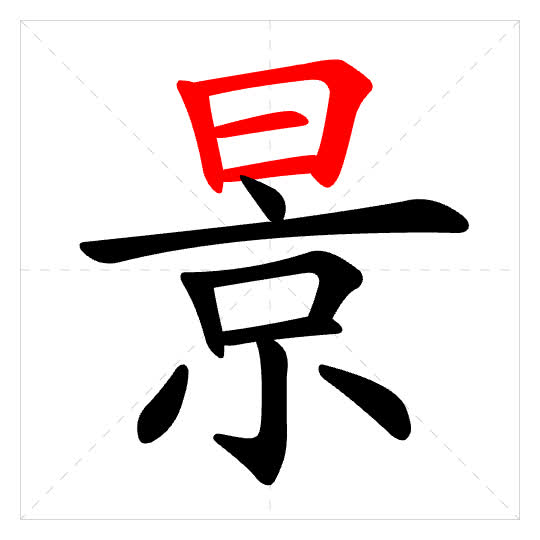
Basic Meaning
n
Often used in compound words to describe social, economic, or life situations, e.g., 背景、晚景.
circumstances; situation; condition.
情形;情况。
Words:
背景晚景远景盛景好景不长
Sentences:
- 他现在晚景凄凉,需要照顾。His circumstances in old age are bleak and he needs care.
- 公司远景规划很清晰。The company's long-term planning is very clear.
- 他的家庭背景很好。He has a good family background.
n
scenery; landscape.
风景,风光。
Words:
风景美景景色景致良辰美景
Sentences:
- 这里的风景非常美丽。The scenery here is very beautiful.
- 春天公园里美景如画。In spring, the beautiful scenery in the park is like a painting.
n
专业术语,常用于影视拍摄或戏剧舞台。例如:这部电影的‘外景’很美。
setting; scene; scenery (in drama, film, etc.).
戏剧、电影等中的场面和景物。
Words:
布景内景外景近景远景
Sentences:
- 这部电影的外景是在海边拍摄的。The exterior scenes of this movie were filmed at the seaside.
- 舞台布景做得非常精致。The stage scenery was made very delicately.
v
通常用于书面或正式场合,多见于复合词‘景慕’和‘景仰’。
to admire; to respect.
佩服,敬慕。
Words:
景慕景仰
Sentences:
- 我十分景仰这位科学家。I deeply admire this scientist.
- 他的品格令人景慕。His character is admirable.
Writing & Component
Radical日
Structuretop_bottom
Stroke Count12
Strokes丨𠃍一一丶一丨𠃍一亅丿丶