
春春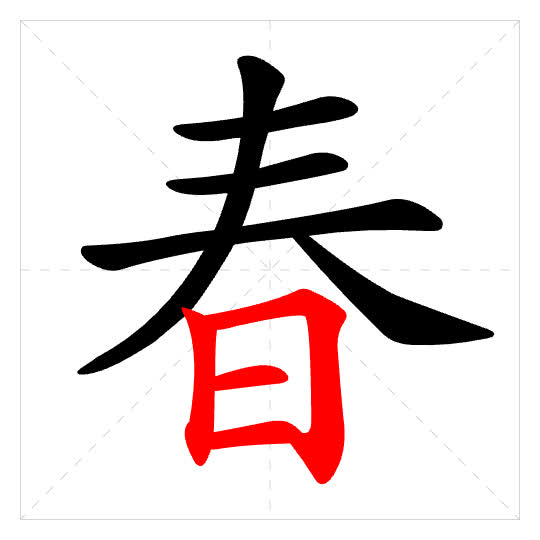
Basic Meaning
n
General term for the season. Commonly used in expressions like 春天 (spring time), 春节 (Spring Festival), 春游 (spring outing).
Spring
春季,一年四季中的第一季,我国习惯指立春到立夏的三个月,也指农历正月至三月。
Words:
春景春晖春游春华秋实春耕
Sentences:
- 春天来了,我们一起去春游吧。Spring is here, let's go on a spring outing together.
- 我最喜欢北京的春景,到处都是花。I like the spring scenery in Beijing the most; there are flowers everywhere.
n
This sense is literary or classical 书面语. In modern Chinese, '年' or '一年' is more common for expressing a year's duration.
(Literary) One year's time; a year.
〈书〉指一年的时间。
Sentences:
- 一别数载,已过十春。(Since) we parted several years ago, ten springs have already passed.
n
Often appears in classical or literary contexts, as well as in fixed expressions like 春心 (amorous thoughts) or 怀春 (to feel amorous longings). Care should be taken with the context.
Desire between men and women; amorous feelings.
指男女情欲。
Words:
怀春春情春心
Sentences:
- 这首诗描写了少女的春情。This poem describes the amorous feelings of a maiden.
- 她正值妙龄,难免会怀春。She's at a marriageable age; it's natural for her to harbor thoughts of love.
n
Mostly appears in idioms or metaphorical usage. The idiomatic expression 妙手回春 (bring the dying back to life, literally 'miraculous hands bring back spring') is a prime example.
(Figurative) Vitality; life force.
比喻生机。
Words:
妙手回春
Sentences:
- 这位老医生医术高明,有妙手回春的本事。This old doctor is highly skilled; he has the ability to perform medical miracles (bring back spring).
Writing & Component
Radical日
Structuretop_bottom
Stroke Count9
Strokes一一一丿㇏丨𠃍一一