
星星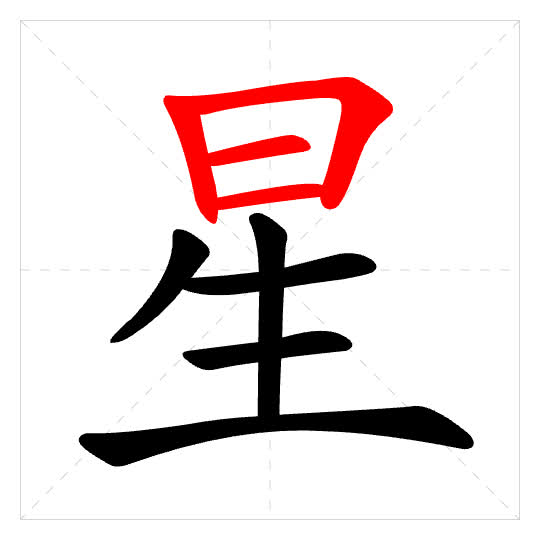
Basic Meaning
n
commonly used in poetic or descriptive contexts
star (as a twinkling celestial body in the night sky)
夜晚天空中闪烁发光的天体。
Words:
星罗棋布月明星稀繁星星辰星斗
Sentences:
- 夜晚的繁星很美丽The stars at night are very beautiful.
- 月明星稀的晚上适合散步A night with a bright moon and few stars is good for walking.
n
used in scientific or educational contexts
star (in astronomy, including stars, planets, satellites, comets, meteors, etc.)
天文学上指宇宙间能发射光或反射光的天体,分为恒星(如太阳)、行星(如地球)、卫星(如月球)、彗星、流星等。
Words:
恒星行星卫星彗星流星
Sentences:
- 太阳是一颗恒星The sun is a star.
- 地球是行星,月球是卫星Earth is a planet, and the moon is a satellite.
n
often refers to objects resembling stars or tiny fragments
star-shaped thing; small or scattered bits
形状像星星的东西;零碎、细小的东西。
Words:
五角星海星火星儿油星眼冒金星
Sentences:
- 这个标志是一个五角星This symbol is a five-pointed star.
- 汤里有一些油星There are some oil droplets in the soup.
n
specifically used for traditional Chinese scales
mark on a scale indicating weight
秤杆上标明斤、两等重量的标记。
Words:
定盘星秤星称星
Sentences:
- 秤星帮助我称重The marks on the scale help me weigh things.
- 定盘星是秤的重要部分The fixed mark is an important part of the scale.
n
commonly used in entertainment and sports
star (metaphor for a famous or influential person)
比喻某种起特殊作用或影响、名气特别大的人物。
Words:
Sentences:
- 他是著名的影星He is a famous movie star.
- 这位歌星有很多粉丝This singer star has many fans.
Writing & Component
Radical日
Structuretop_bottom
Stroke Count9
Strokes丨𠃍一一丿一一丨一