
早早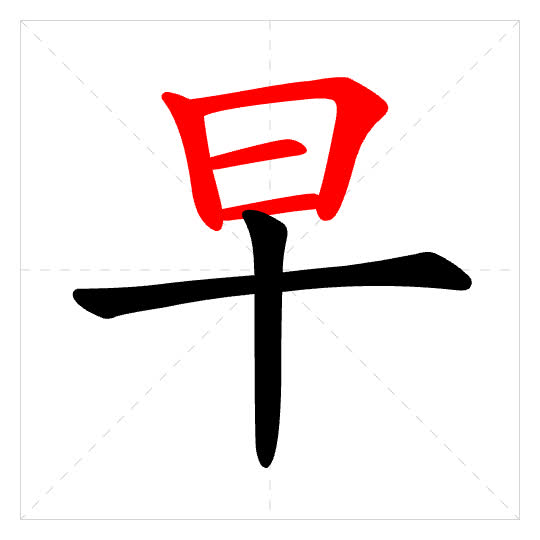
Basic Meaning
n
Commonly used in time expressions like 早上, 早晨.
morning; early morning
早上;早晨。
Words:
Sentences:
- 我每天清早去公园跑步I go to the park for a run every early morning.
- 早餐我喜欢吃面包和牛奶For breakfast, I like to eat bread and milk.
- 早市上有很多新鲜的水果There are many fresh fruits at the morning market.
adv
Often used with 已 or 就 to emphasize that something happened much earlier.
long ago; already; earlier (than expected)
表示事情的发生离现在已有一段时间;早已。
Words:
Sentences:
- 他早已知道这个消息了He already knew this news long ago.
- 电影票早卖完了The movie tickets sold out long ago.
adj
Describes a point in time that is early relative to a period (e.g., 早期, 早春).
early (in terms of time sequence); early-stage
时间靠前。
Words:
早期早春早稻清早早市
Sentences:
- 早春的天气还很冷The weather in early spring is still very cold.
- 他在早期遇到了很多困难He encountered many difficulties in the early stages.
adj
Used comparatively, often opposite to 晚. Can refer to early maturity or doing things in advance.
earlier than (a specific time); ahead of time
比某一时间靠前;更早(跟“晚”相对)。
Words:
早熟早点早茶及早
Antonyms:
Sentences:
- 她比同龄人早熟She is more mature than her peers (early maturity).
- 我们应该早点出发,避开堵车We should leave earlier to avoid traffic jams.
adj
A common morning greeting; often repeated as 早! or 早上好!.
(greeting) good morning
问候的话,用于早晨见面时互相打招呼。
Sentences:
- 早上好!你吃早餐了吗?Good morning! Have you had breakfast?
- 早!今天天气真不错Morning! The weather is really nice today.
Writing & Component
Radical日
Structuretop_bottom
Stroke Count6
Strokes丨𠃍一一一丨