
散散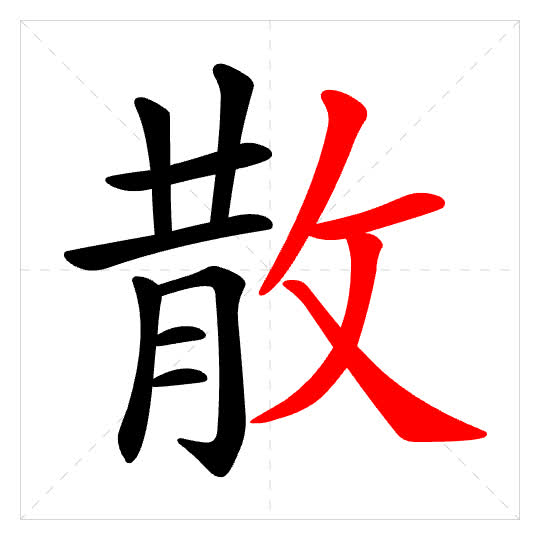
Basic Meaning
v
Often follows or combines with characters describing a gathering, such as 会, 伙, or 聚.
(of people or things gathered together) to disperse; to break up (opposite of 'to gather').
聚集在一起的人或事物分开(跟“聚”相对)。
Words:
散伙散会一哄而散烟消云散解散
Antonyms:
聚集
Sentences:
- 会议五点就散了。The meeting broke up at five o'clock.
- 听完老板的话,人群很快就散伙了。After hearing the boss's words, the crowd dispersed very quickly.
v
Often used with words related to information, seeds, or objects being given out or scattered.
to spread; to distribute; to scatter; to disseminate.
散布;分发;分给;分散。
Words:
散布散播天女散花散传单发散
Sentences:
- 农民在田里播散种子。The farmers are scattering seeds in the field.
- 公司门口的志愿者正在散发传单。Volunteers at the company entrance are distributing flyers.
v
Most commonly used with words related to emotions, as in 散心 or 散闷.
to dispel; to relieve (negative moods or feelings).
排遣;排除。
Words:
散心散闷散愁
Sentences:
- 周末去公园散散心,心情会好很多。Going to the park to relieve stress on the weekend will make you feel much better.
v
A regional term similar to 解雇 but more broadly used for ending agreements. Characteristic of Northern Chinese dialects.
(Northern Mandarin) to disband; to dismiss; to dissolve (agreements, organizations, or to fire someone).
(北方官话)解除协议或契约;解雇。
Words:
解散
Sentences:
- 我们那地方,生意做不下去,老板就把伙计给散了。Where I'm from, if the business can't be sustained, the boss just dismisses the employees.
Writing & Component
Radical攵
Structureleft_right
Stroke Count12
Strokes一丨丨一丨𠃌一一丿一丿㇏