
排排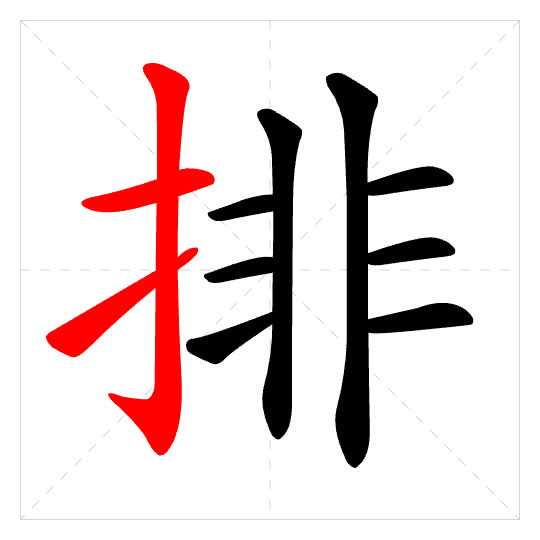
Basic Meaning
v
Often used for organizing things or people in order.
to arrange in a row or line; to line up
一个挨一个按次序摆成行列。
Words:
Sentences:
- 请把书按顺序排好。Please arrange the books in order.
- 学生们在操场上排队。The students are lining up on the playground.
n
Refers to a formed arrangement of people or things.
row; line; queue
排成的行列。
Words:
并排前排后排第三排成排
Sentences:
- 我们坐在电影院的前排。We sit in the front row of the cinema.
- 房子前面有一排小树。There is a row of small trees in front of the house.
n
A military unit below a company and above a squad.
platoon (military unit)
军队的编制单位,隶属于连,下辖若干班。
Words:
排长警卫排警卫排长二连三排
Sentences:
- 他在军队里担任排长。He serves as a platoon leader in the army.
n
Abbreviation for 排球; used in sports contexts.
volleyball (sport)
指排球运动。
Words:
排坛女排男排中国女排排球运动员
Sentences:
- 她喜欢看女排比赛。She likes watching women's volleyball matches.
q
Measure word; e.g., 一排房子 means 'a row of houses'.
classifier for rows or lines of people or things
量词。用于成行列的人或事物。
Words:
一排房子两排小树一排子弹一排椅子两排牙齿
Sentences:
- 这里有一排椅子可以坐。There is a row of chairs to sit on here.
- 他买了两排子弹。He bought two rows of bullets.
n
Used for water transport or as a floating platform.
raft (made of bamboo or wood)
用竹、木并排连成的水上交通运输工具;也指为便于水运而扎成排的竹木。
Words:
竹排放排木排
Sentences:
- 他们乘竹排在河上漂流。They drift on the river on a bamboo raft.
n
Common in food contexts, e.g., 牛排 for 'beef steak'.
cutlet; steak (Western-style fried meat dish)
一种西式食品,把大而厚的肉片用油煎炸制成。
Words:
鱼排牛排猪排鸡排肉排
Sentences:
- 晚餐我点了牛排。I ordered steak for dinner.
v
Used in theater, music, or other performing arts.
to rehearse; to practice (for a performance)
排演,练习演戏。
Words:
彩排排演排戏排练
Sentences:
- 演员们正在排练新戏。The actors are rehearsing a new play.
v
Often refers to gases, liquids, or emotions.
to release; to emit; to discharge
物体从内部释放出来。
Words:
排气排遣排涝排放排污
Sentences:
- 汽车需要定期排气。Cars need to release exhaust regularly.
- 他通过运动来排遣压力。He relieves stress through exercise.
v
Can imply forceful or deliberate action.
to remove; to eliminate; to exclude
(用力)除去。
Words:
排挤排雷力排众议排除排他
Synonyms:
Sentences:
- 公司决定排除这个选项。The company decided to eliminate this option.
- 他力排众议,坚持自己的计划。He insisted on his plan, overriding all objections.
Writing & Component
Radical扌
Structureleft_right
Stroke Count11
Strokes一亅㇀丨一一一丨一一一