
惯惯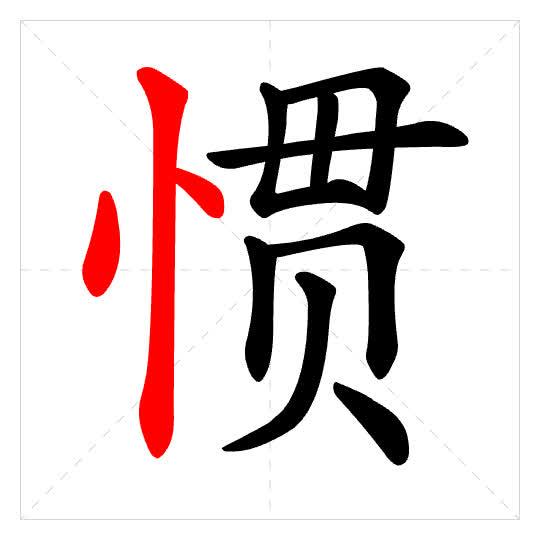
Basic Meaning
v
Often describes a behavior that has become habitual over time, forming a stable pattern. Can be used in both positive and neutral contexts (e.g., 习惯, 惯用).
to be accustomed to; to be used to; to habituate.
习以为常,积久成性;习惯。
Words:
惯盗惯犯惯例惯用司空见惯
Sentences:
- 我已经习惯每天早上喝一杯咖啡。I've already gotten used to having a cup of coffee every morning.
- 这是他们公司惯用的谈判手法。This is their company's habitual negotiation tactic.
- 他对这种加班文化早已司空见惯。He has long since become accustomed to this overtime culture.
v
Specifically refers to the act of overindulging or being overly permissive towards children or subordinates, often leading to negative character traits. Commonly used with 娇, 纵, 养.
to spoil; to indulge; to dote on.
纵容;放任(指对孩子或对下级)。
Words:
娇惯惯纵娇生惯养
Synonyms:
纵
Sentences:
- 父母不能太惯孩子,要让他们学会独立。Parents shouldn't spoil their children too much; they should let them learn to be independent.
- 他从小就被爷爷奶奶娇生惯养。He has been pampered and spoiled by his grandparents since childhood.
Writing & Component
Radical忄
Structureleft_right
Stroke Count11
Strokes丶丶丨㇄𠃍丨一丨𠃍丿丶