
怕怕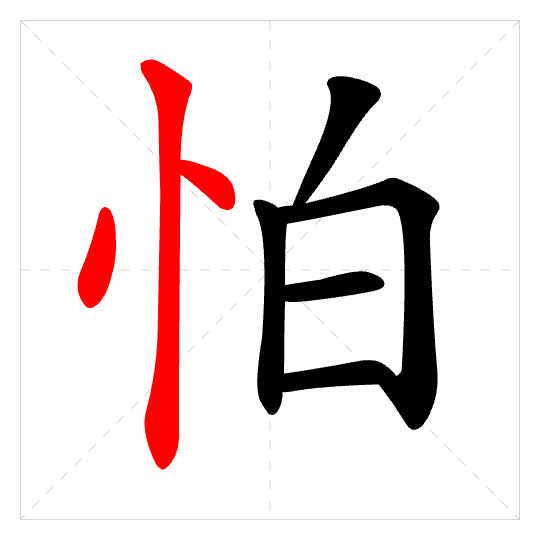
Basic Meaning
v
A common verb for expressing fear or apprehension. Can be followed directly by a noun or a verb phrase (e.g., 怕蛇, 怕黑, 怕迟到).
to fear; to be afraid of; to dread.
害怕;畏惧。
Words:
Synonyms:
畏
Sentences:
- 很多小朋友都怕黑。Many young children are afraid of the dark.
- 他非常怕他的老板。He is very afraid of his boss.
v
Describes something that is fragile, sensitive, or easily damaged. The object is always a verb or verb phrase indicating the damaging action (e.g., 怕晒 'susceptible to sunlight', 怕碰 'easily scratched/bumped').
to be unable to withstand; to be susceptible to (must take a verb object).
禁受不住(必带动词宾语)。
Words:
怕磕碰怕晒怕碰
Sentences:
- 这种花很娇贵,怕晒,要放在阴凉处。This type of flower is very delicate; it can't withstand sun exposure and should be placed in a shady spot.
- 新买的手机屏幕怕磕碰,你最好贴个膜。The screen of a new phone is susceptible to bumps and scratches; you'd better put a screen protector on it.
v
Used as an adverb, often at the beginning of a sentence, to soften a statement or express a polite concern. Similar to 'I'm afraid...' in English. It indicates the speaker's estimation, often with a tone of worry.
perhaps; maybe; I'm afraid that... (expresses conjecture or worry).
副词,恐怕,或许,表示猜想或疑虑。
Sentences:
- 怕是要下雨了,我们带把伞吧。It looks like it's going to rain; let's bring an umbrella.
- 他现在还没到,怕是有事耽误了。He hasn't arrived yet; perhaps something delayed him.
adv
Used similarly to sense 3 as an adverb for estimation. It can be used in the phrase 怕是 (pà shì) to mean 'probably is' or 'I'm afraid it is'. The nuance of worry is often context-dependent.
probably; likely; (expresses estimation, sometimes with a nuance of worry).
表示估计,有时还含有忧虑、担心的意思。
Words:
怕是
Sentences:
- 这么晚了,他怕是已经睡了。It's so late, he's probably already asleep.
- 明天的会议很重要,他怕是会紧张。Tomorrow's meeting is very important; he's likely to be nervous (and I'm a bit worried about that).
Writing & Component
Radical忄
Structureleft_right
Stroke Count8
Strokes丶丶丨丿丨𠃍一一