
念念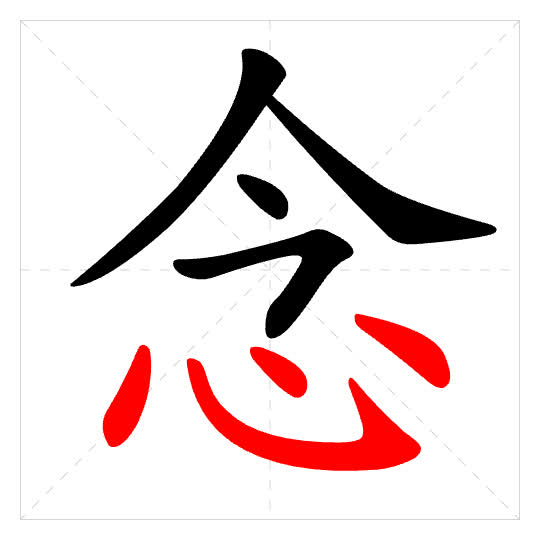
Basic Meaning
v
Describes a feeling of affectionate remembrance or longing, often for people or times in the past. Common collocations include 想念, 怀念.
to think of fondly; to miss; to remember with affection.
惦记,常常地想。
Words:
念旧惦念挂念思念怀念
Sentences:
- 他在国外工作,每天都念着他的家人。He works abroad and thinks fondly of his family every day.
- 她总是念着小时候的朋友们。She often remembers her childhood friends with affection.
- 奶奶很念旧,常常说起以前的事情。Grandma is very nostalgic and often talks about the old days.
n
Often used in set phrases. 私心杂念 (selfish thoughts and distracting ideas) and 一念之差 (a momentary slip in judgement) are common examples.
thought; idea.
想法;念头。
Words:
杂念一念之差私心杂念念头慈念错念
Sentences:
- 做决定之前,他心中有一丝犹豫不决的念头。Before making the decision, he had a hesitant thought in his mind.
- 抛开私心杂念,你才能更好地完成工作。Only by casting aside selfish thoughts can you do your work better.
v
to read aloud; to chant.
诵读。
Words:
念书念叨念经念信念口诀
Sentences:
- 她每天晚上都会给孩子们念故事书。She reads storybooks to the children every night.
- 学生跟着老师一起念口诀。The students chant the mnemonic rhymes together with the teacher.
v
Often used in the phrase 念书 (nianshu4) and is more commonly used in spoken, everyday language than more formal terms like 上学.
to attend school.
指上学。
Words:
念书
Sentences:
- 他还在念大学,明年毕业。He's still attending university and will graduate next year.
- 你孩子在哪儿念书Where does your child go to school?
Writing & Component
Radical心
Structuretop_bottom
Stroke Count8
Strokes丿㇏丶㇇丶㇂丶丶