
强强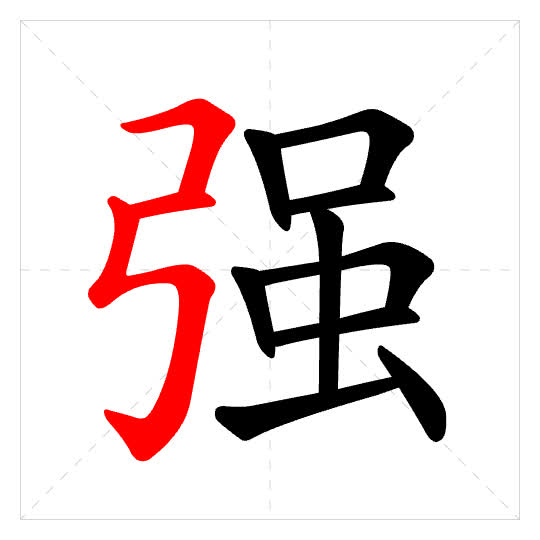
Basic Meaning
adj
Often describes physical strength or national power.
strong; powerful
健壮,有力,跟“弱”相对。
Words:
强壮强健强大身强力壮强国
Antonyms:
弱
Sentences:
- 他每天锻炼,身体越来越强壮了。He exercises every day and his body is getting stronger and stronger.
- 强大的国力是稳定发展的基础。A strong national power is the foundation for stable development.
adj
Describes strong emotions or mental determination. Can be positive (坚强) or competitive (要强).
strong-willed; determined
感情或意志所要求达到的程度高;坚强。
Words:
要强坚强自强刚强好强
Sentences:
- 她很要强,事事都要比别人做得好。She is very competitive and wants to do everything better than others.
- 遇到困难时,坚强的心态很重要。Having a strong mindset is very important when facing difficulties.
v
A transitive verb describing forceful action. It often carries a negative connotation of imposition or theft (e.g., 强盗, 强占).
to force; to compel
逼迫;用强力。
Words:
强占强制强渡强取强盗
Sentences:
- 任何理由都不能强占别人的私人财产。No reason can justify forcibly taking someone's private property.
v
A transitive verb meaning to make something stronger, often used in the context of personal health or national development.
to strengthen; to make strong
使强壮;使强大。
Words:
富国强兵强身健体自强不息自强增强
Sentences:
- 我们要不断增强企业的创新能力。We must continuously strengthen the innovative capabilities of the enterprise.
- 跑步是强身健体的好方法。Running is a good way to strengthen the body.
adj
In comparative contexts, it means 'better than' or 'superior to'.
superior; better (used in comparison)
优胜;好(多用于比较)。
Sentences:
- 这款电脑的功能明显比上一代强。This computer's features are clearly superior to the previous generation.
n
Refers to a person or group with great power or influence.
strongman; powerful faction
力量大的人或势力。
Words:
豪强列强弱肉强食权强奸强
Sentences:
- 在旧社会,豪强欺压百姓是常事。In old society, powerful landlords oppressing common people was common.
Writing & Component
Radical弓
Structureleft_right
Stroke Count12
Strokes𠃍一㇉丨𠃍一丨𠃍一丨㇀丶