
式式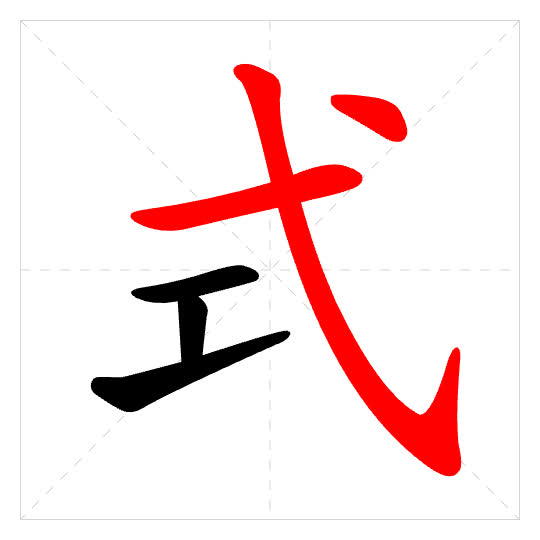
Basic Meaning
n
Often used in compound nouns to describe types or styles like 新式 (new style), 中式 (Chinese style).
style; type; form. Refers to the outward appearance or design of an object.
物体外形的样子。
Words:
样式新式旧式西式中式
Sentences:
- 这家餐厅的装修是中式风格。This restaurant's decor is in Chinese style.
- 她喜欢买新式的衣服。She likes to buy new-style clothes.
n
format; pattern; specification. Refers to a specific, set standard or structure.
特定的规格。
Words:
格式程式式序式度式规
Sentences:
- 请按照指定的格式填写这份表格。Please fill out this form according to the specified format.
n
Typically used in formal, often public, events.
ceremony; rite; ritual.
仪式;典礼。
Words:
开幕式阅兵式闭幕式毕业式
Sentences:
- 毕业式将在下周五举行。The graduation ceremony will be held next Friday.
- 开幕式上有很多精彩的表演。There were many wonderful performances at the opening ceremony.
n
formula. A set of symbols in natural sciences expressing a relationship or law.
自然科学中表明某种关系或某些规律的一组符号。
Words:
算式分子式等式因式方程式
Sentences:
- 水的分子式是H2The molecular formula of water is H2O.
- 这个数学算式太难了,我不会解。This math formula is too difficult; I can't solve it.
n
A technical grammar term; common examples in Chinese include 命令式 (imperative mood).
mood. A grammatical category indicating the speaker's attitude.
一种语法范畴,表示说话者对所说事情的主观态度。如叙述式、命令式、条件式。
Words:
命令式条件式叙述式
Sentences:
- “请坐”是一个命令式的句子"Please sit" is a sentence in the imperative mood.
Writing & Component
Radical弋
Structuresemi_enclosed
Stroke Count6
Strokes一一丨㇀㇂丶