
应应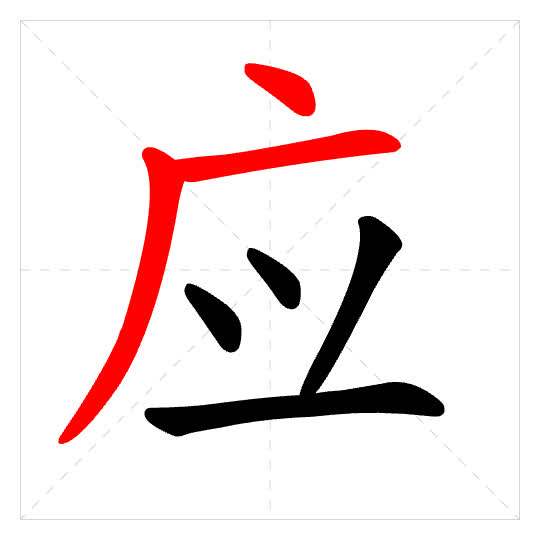
Basic Meaning
v
Often used in formal or polite contexts to indicate consent.
to agree; to promise
答应,应承。
Words:
Sentences:
- 他应允了我的请求。He agreed to my request.
- 我应承帮他完成这个项目。I promised to help him finish this project.
part
Used as a particle to express obligation or expectation, similar to 应该.
should; ought to
该,当。
Sentences:
- 你应当早点睡觉。You should go to bed earlier.
- 他理应如此努力工作。He ought to work hard like this.
n
Specifically refers to students graduating in the current academic year, as in 应届生.
current period (used only for graduates)
本期的(只用于毕业生)。
Words:
应届生应届
Sentences:
- 她是今年的应届生。She is a graduate of this year's class.
- 我们公司招聘应届毕业生。Our company is hiring fresh graduates.
Writing & Component
Radical广
Structuresemi_enclosed
Stroke Count7
Strokes丶一丿丶丶丿一