
容容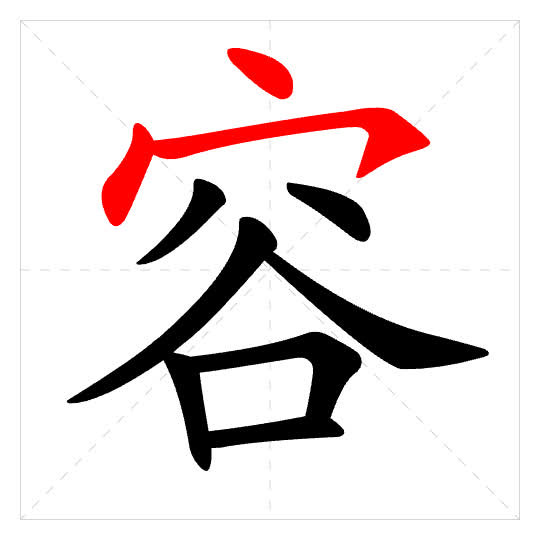
Basic Meaning
v
often used in contexts involving physical space or capacity, e.g., with 容量 (capacity) or 容器 (container)
to contain; to hold; to accommodate
包含;容纳;盛得下。
Words:
容量容器无地自容无处容身容纳
Synonyms:
纳含
Sentences:
- 这个容器容量很大,能容纳很多水。This container has a large capacity and can hold a lot of water.
- 这个房间太小,无处容身。This room is too small, there's no place to accommodate oneself.
v
commonly used in interpersonal or moral contexts, e.g., 宽容 (tolerant) or 容忍 (to endure)
to tolerate; to forgive
宽容;原谅。
Words:
宽容容忍大度容人情理难容
Sentences:
- 他犯了错误,但我们应该宽容他。He made a mistake, but we should be tolerant of him.
- 她无法容忍这种不公的行为。She cannot tolerate this unfair behavior.
v
often used in formal or imperative contexts, e.g., 容许 (to permit) or 不容 (not allow)
to allow; to permit
让,允许。
Words:
义不容辞刻不容缓不容争辩容许不容分说
Sentences:
- 这个问题不容争辩,我们必须马上解决。This issue does not allow for debate; we must solve it immediately.
- 老师容许学生提问。The teacher allows students to ask questions.
n
refers specifically to facial features or overall physical appearance, e.g., 容貌 (appearance) or 容颜 (face)
appearance; looks
相貌,仪表。
Words:
容貌容颜仪容整容美容
Sentences:
- 她的容貌非常美丽。Her appearance is very beautiful.
- 他最近去美容了,看起来更年轻。He recently had a beauty treatment and looks younger.
n
used for the visual state or presentation of things, often in compound words like 市容 (city appearance) or 阵容 (lineup)
appearance; scene; aspect
事物的外观;景象。
Words:
军容市容阵容警容
Sentences:
- 这个城市的市容很整洁。The appearance of this city is very clean and tidy.
- 球队的阵容很强,有望赢得比赛。The team's lineup is very strong and has a good chance of winning the game.
Writing & Component
Radical宀
Structuretop_bottom
Stroke Count10
Strokes丶丶㇇丿丶丿㇏丨𠃍一