
客客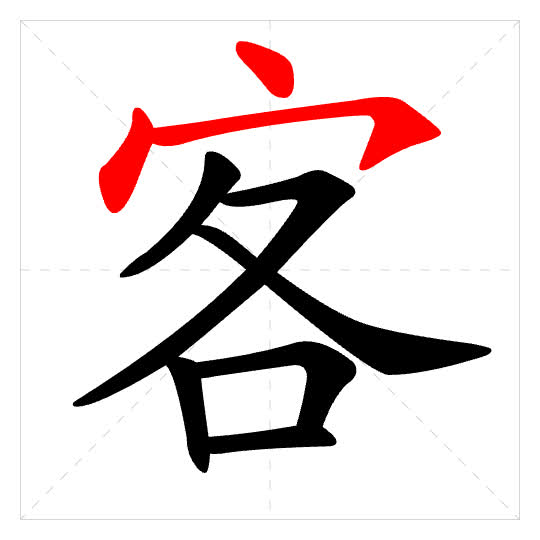
Basic Meaning
n
Contrasts with 主. The host-guest (主客) relationship is central to Chinese hospitality.
guest; visitor (as opposed to host)
客人,被邀请受招待的人;来探访的人(跟“主”相对)。
Words:
Synonyms:
Antonyms:
Sentences:
- 今天家里有客,妈妈准备了很多菜。We have guests at home today, so Mom prepared many dishes.
- 作为客人,要懂得客随主便。As a guest, you should know to follow the host's arrangements.
n
Used as a suffix in many compound words for service recipients, e.g., 顾客 (gùkè, customer), 乘客 (chéngkè, passenger).
customer; client; passenger (as served by a business or service).
服务行业称呼来光顾的人。
Words:
Synonyms:
Sentences:
- 这家咖啡馆的回头客很多。This café has many regular customers.
- 请各位乘客系好安全带。Please fasten your seat belts, passengers.
n
Often used as a suffix in somewhat historical or specialized terms, e.g., 政客 (zhèngkè, politician), 侠客 (xiákè, knight-errant). Can carry neutral or negative connotations depending on context.
person engaged in a specific, often itinerant, activity.
对某些奔走各地从事某种活动的人的称呼。
Words:
说客政客侠客镖客刺客
Sentences:
- 电影里的那位侠客武功很高。The knight-errant in the movie has very high martial arts skills.
- 那位说客成功说服了他们。That lobbyist successfully persuaded them.
v
This is a verb. Often used in a literary or formal context to describe living in a place other than one's hometown.
to reside away from home; to sojourn.
寄居或迁居外地。
Words:
客居客死他乡客籍久客异乡客寓
Sentences:
- 他在北京客居了十年。He resided in Beijing away from home for ten years.
adj
An adjective describing something/someone from the outside, as opposed to the home side (主队, zhǔduì).
visiting; external; non-native (to a region, unit, or field).
非本地区、本单位、本行业的;外来的。
Words:
客队客座客串客座教授
Sentences:
- 今晚的比赛,客队表现得非常好。In tonight's match, the visiting team performed exceptionally well.
- 她是一位客座教授,来自美国。She is a visiting professor from the United States.
adj
Mainly used in philosophical or formal contexts. The core opposite is 主观 (zhǔguān, subjective).
objective; external to the mind.
在人类意识外独立存在的。
Words:
客观客体
Sentences:
- 我们应该客观地分析这个问题。We should analyze this problem objectively.
Writing & Component
Radical宀
Structuretop_bottom
Stroke Count9
Strokes丶丶㇇丿㇇㇏丨𠃍一