
宜宜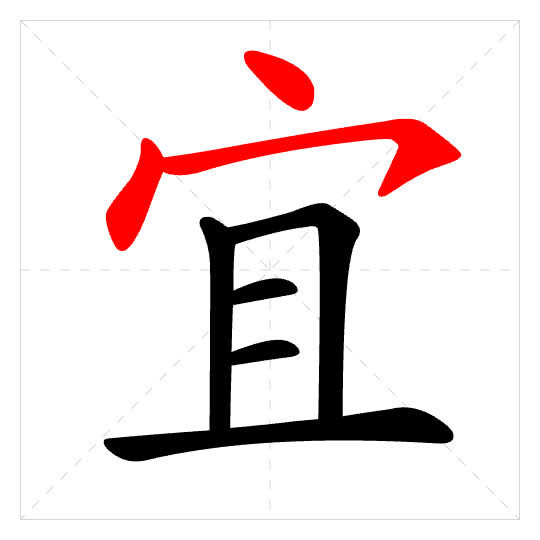
Basic Meaning
adj
Often used in formal or descriptive contexts, e.g., 相宜, 适宜, 合宜.
suitable; appropriate
适合,适当。
Words:
相宜适宜合宜老少皆宜因地制宜
Synonyms:
Sentences:
- 这件衣服的颜色很适宜春天穿。The color of this clothing is very suitable for wearing in spring.
- 这个活动老少皆宜,大家都喜欢。This activity is suitable for all ages, and everyone likes it.
v
Commonly appears in phrases like 不宜, meaning 'should not' or 'not advisable'.
should; ought to (often used in negative form)
应当(多用于否定式)。
Words:
事不宜迟不宜如此
Sentences:
- 天气不好,不宜出门。The weather is bad, so it's not advisable to go out.
- 事不宜迟,我们得快点行动。There's no time to delay; we need to act quickly.
v
Used to describe something that is pleasant or well-suited, e.g., 宜人 means 'pleasant'.
suitable for; fitting
适合于。
Words:
景色宜人
Sentences:
- 这里的景色宜人,很适合散步。The scenery here is pleasant and very suitable for walking.
Writing & Component
Radical宀
Structuretop_bottom
Stroke Count8
Strokes丶丶㇇丨𠃍一一一