
子子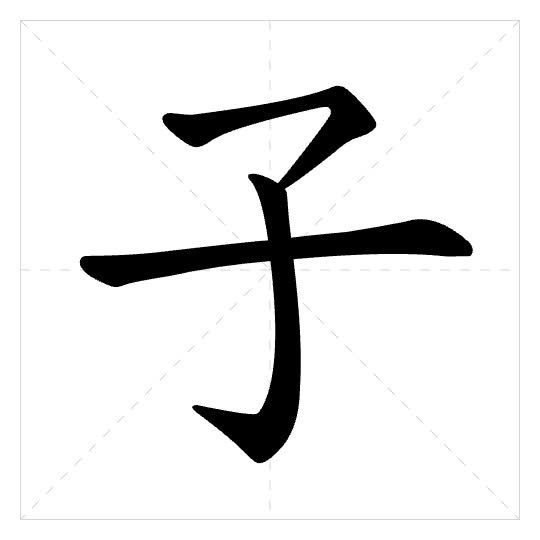
Basic Meaning
n
modern usage often means 'son'
son; child (in ancient times, referred to children, now specifically son)
古代指儿女,现专指儿子。
Sentences:
- 他是家里的独生子。He is the only son in the family.
- 这对夫妻有一子一女。This couple has one son and one daughter.
n
used in compound words to denote types of people
person; people (a general term for humans)
人的统称。
Words:
Synonyms:
Sentences:
- 这个学校有很多学子。There are many students at this school.
- 男子和女子都可以参加比赛。Both men and women can participate in the competition.
n
historical/formal, often used in names of philosophers
master; scholar (in ancient times, referred to learned men, also an honorific for men)
古代称有学问的男人,也是男子的美称。
Words:
孔子诸子百家荀子韩非子老子
Sentences:
- 孔子是中国古代著名的思想家。Confucius was a famous ancient Chinese thinker.
- 诸子百家包括很多不同的学派。The Hundred Schools of Thought include many different philosophical schools.
n
historical/academic term
the third category in the ancient four-part classification of books (classics, history, masters, collections)
古代图书四部分类法(经史子集)的第三类。
Words:
子部子书
Sentences:
- 子部包含哲学和文学书籍。The 'Masters' category includes philosophy and literature books.
n
often used with '儿' suffix in colloquial speech
seed (of plants)
(~儿)植物的种子。
Words:
Sentences:
- 我喜欢吃瓜子。I like to eat sunflower seeds.
- 这些莲子可以用来煮汤。These lotus seeds can be used to make soup.
n
often used with '儿' suffix in colloquial speech
egg; roe (of animals)
(~儿)动物的卵。
Words:
鱼子鸡子儿蚕子狼子野心下子儿
Sentences:
- 鱼子酱是一种美食。Caviar is a type of delicacy.
- 鸡子儿可以做成炒蛋。Chicken eggs can be made into scrambled eggs.
adj
used as an adjective to describe immaturity or small size
young; small; tender
幼小的;小的;嫩的。
Words:
子鸡子猪子姜
Sentences:
- 子鸡比成年鸡更嫩。Young chickens are more tender than adult chickens.
- 子姜适合用来做沙拉。Young ginger is suitable for making salads.
adj
used in compound words to indicate something secondary or affiliated
subsidiary; derived; auxiliary
派生的,附属的。
Words:
子公司子城子作品子金子音
Sentences:
- 这家公司有一个子公司。This company has a subsidiary.
n
refers to tiny, solid items
small hard object; pellet; grain
小而坚硬的块状物或粒状物。
Words:
石子棋子枪子小药子算盘子儿
Sentences:
- 孩子们喜欢玩石子。Children like to play with small stones.
- 棋盘上的棋子是黑色的。The chess pieces on the board are black.
n
historical term
viscount (the fourth rank of ancient noble titles: duke, marquis, earl, viscount, baron)
古代贵族五等爵位(公、候、伯、子、男)的第四等。
Words:
子爵
Sentences:
- 子爵是古代的一种贵族头衔。Viscount was a type of noble title in ancient times.
- 在英国,子爵的地位很高。In the UK, the status of a viscount is very high.
Writing & Component
Radical子
Structuresingle
Stroke Count3
Strokes㇇亅一