
头头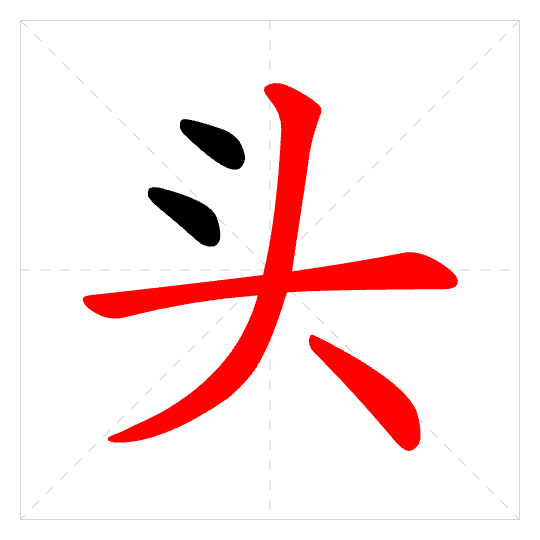
Basic Meaning
n
physical body part
head; the top part of the human body or the front part of an animal's body
脑袋,人身体的最上部分或动物身体的最前面的部分。
Words:
头骨头脑头脸头颅剃头分头
Synonyms:
冠首
Antonyms:
尾脚
Sentences:
- 他的头骨很硬His skull is very hard.
- 我昨天剃了头I got a haircut yesterday.
n
often used with 儿 in colloquial speech
beginning or end of something
(~儿)事情的起点或终点。
Words:
话头儿有头有尾到头从头开头
Sentences:
- 这个故事有头有尾This story has a beginning and an end.
- 我们从头开始吧Let's start from the beginning.
n
colloquial, often used with 儿
leader; boss
(~儿)为首的人;头目。
Words:
头儿工头儿土匪头儿头目领头
Sentences:
- 他是我们公司的头儿He is the boss of our company.
- 工头儿负责管理工人The foreman is responsible for managing the workers.
n
used in contexts like dividing tasks or attention
aspect; side
方面。
Words:
分头去找心挂两头
Sentences:
- 我们分头去找丢失的钥匙We split up to look for the lost keys.
- 他心挂两头,无法专心His mind is divided between two things, so he can't focus.
n
refers to the physical extremity of things
tip; top; end of an object
物体的顶端。
Words:
山头笔头烟头布头蜡头儿
Sentences:
- 山头上有一棵树There is a tree on the hilltop.
- 笔头坏了,需要换新的The pen tip is broken and needs to be replaced.
m
used as a measure word for ranking or classification
first; top; foremost
第一;次序在最前的。
Words:
头等头号头班头版头条
Synonyms:
冠
Sentences:
- 这是头等大事This is a top priority matter.
- 头条新闻很重要The headline news is very important.
adj
adjective form indicating precedence in order
first; initial (often used before quantifiers)
次序居先的;最前的(多用在数量词前)。
Words:
头几天头趟头一遍头几个头半本
Sentences:
- 头几天他不太适应新工作In the first few days, he didn't adapt well to the new job.
- 头一遍练习很简单The first round of practice is very simple.
n
refers to entities that lead or come first
leading; first in order
领头的;次序居先的。
Words:
头羊头雁头领头车头马
Sentences:
- 头羊带领羊群前进The lead sheep guides the flock forward.
- 头车在车队的最前面The lead car is at the front of the convoy.
n
specific measure word usage
measure word for certain animals, garlic, or marriages (limited to 'one' for marriages)
①用于某些动物。②用于大蒜。③用于亲事(数词限于“一”)
Sentences:
- 他买了一头牛He bought a cow.
- 我需要一头大蒜I need a head of garlic.
prep
preposition used in spoken Chinese
before; near (introducing time in colloquial speech)
〈口〉引进动作行为的时间,相当于“在……之前、临近”。
Words:
临头
Sentences:
- 秋天快到头了,树叶开始逐渐变黄。Autumn is almost over, and the leaves are starting to turn yellow.
Writing & Component
Radical大
Structuresingle
Stroke Count5
Strokes丶丶一丿丶