
夫夫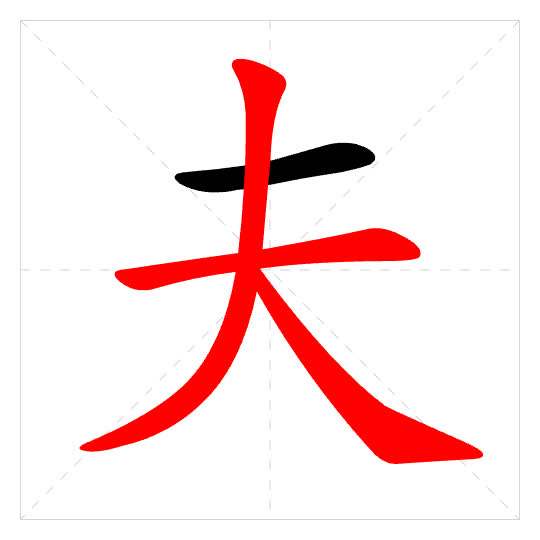
Basic Meaning
n
Now mostly used in set phrases or classical references. Rarely used alone in modern speech to refer to a man.
(archaic) adult man
成年男子的通称。
Words:
匹夫
Sentences:
- 这句话体现了一种大丈夫气概。This statement embodies a heroic, manly spirit.
n
Commonly found in compound words specifying the type of labor, e.g., 农夫 (farmer).
laborer; worker (engaged in physical labor)
称从事某种体力劳动维持生活的人。
Words:
农夫樵夫车夫船夫渔夫
Sentences:
- 这位老农夫在田里工作了一辈子。This old farmer has worked in the fields his whole life.
- 河边的渔夫每天很早就去捕鱼。The fisherman by the river goes fishing very early every day.
n
Most common modern usage, often found in words like 夫妻 (husband and wife).
husband
丈夫,跟“妻”“妇”相对。
Words:
夫妻夫妇姐夫姑夫妹夫
Antonyms:
妻妇
Sentences:
- 他们夫妻俩感情非常好。That husband and wife have a very good relationship.
- 她的姐夫是一位工程师。Her elder sister's husband is an engineer.
n
Historical term referring to laborers forced into service, especially under feudal systems. Has a specific historical context.
(historical) conscripted laborer; forced laborer
旧时服劳役的人,特指被统治阶级强迫去做苦工的人。
Words:
拉夫民夫夫役
Sentences:
- 这些民夫被迫为国王修路。These commoners were forced to build roads for the king.
Writing & Component
Radical大
Structuresingle
Stroke Count4
Strokes一一丿㇏