
器器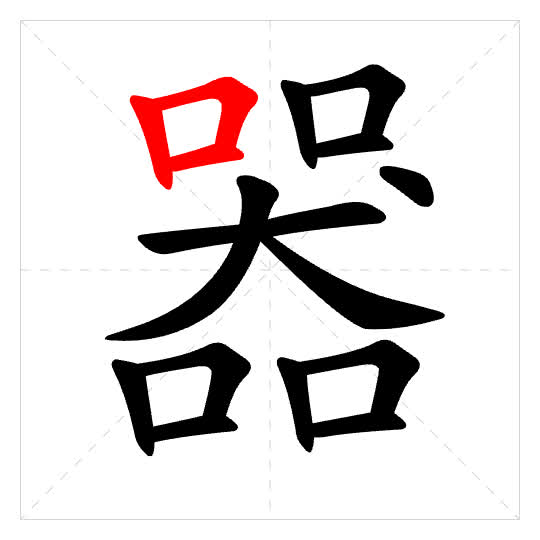
Basic Meaning
n
Often used in compound words specifying the material or function of the object, like 陶器 (pottery), 瓷器 (porcelain), 木器 (woodenware).
tool; utensil; implement (general term)
用具的总称。
Words:
陶器瓷器木器容器武器
Sentences:
- 这种陶器是手工制作的,非常精美。This pottery is handmade and very exquisite.
- 超市里有各种各样的厨房器皿,比如锅碗瓢盆。The supermarket has various kitchen utensils, like pots, bowls, ladles, and basins.
This sense is typically used in specific compounds like 器官, 消化器, 生殖器. Alone, "器" rarely means "organ".
(Referring to) organ; part of a biological entity with a specific function
见“器官”。生物体中具有某种独立生理机能的部分,如耳、眼、花、叶等。
Words:
消化器生殖器
Sentences:
- 植物也有自己的生殖器来完成繁殖。Plants also have their own reproductive organs to complete reproduction.
n
Often found in classical or literary contexts. Commonly appears in phrases like 器量 (capacity) or 成器 (to be capable or useful).
capacity; ability; measure
度量;才干。
Synonyms:
器量大器晚成不成器成器
Sentences:
- 有的人即便身处顺境,也不懂得把握机会,最终难成大器。Some people, even when in favorable circumstances, do not know how to seize opportunities and ultimately fail to become outstanding individuals.
v
Literary usage. It is almost exclusively used in the compound 器重.
to regard highly; to value
〈书〉器重,看重,看得起。
Words:
器重
Sentences:
- 领导很器重他的才华,给了他很多机会。The leader highly valued his talent and gave him many opportunities.
- 这位老师向来器重努力的学生。This teacher has always valued hardworking students.
Writing & Component
Radical口
Structuretop_bottom
Stroke Count16
Strokes丨𠃍一丨𠃍一一丿㇏丶丨𠃍一丨𠃍一