
哥哥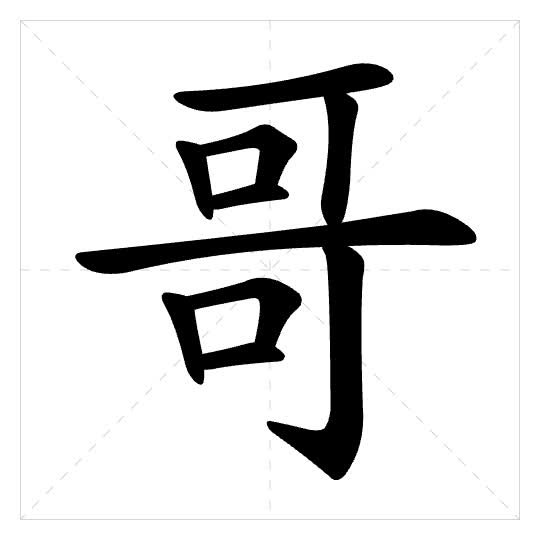
Basic Meaning
n
Often reduplicated as 哥哥 (ge1 ge) as a term of endearment.
older brother; brother (including cousins from the paternal or maternal side, but who are of the same generation and older).
兄,同父母(或只同父、只同母)或亲属中同辈而年龄比自己大的男子(叠)。
Words:
Antonyms:
Sentences:
- 我哥哥比我大五岁。My older brother is five years older than me.
- 这个周末我要去看望我的表哥。I'm going to visit my older male cousin (on my mother's side) this weekend.
n
Common in informal social settings. Can be combined with a surname (e.g., 张大哥) or a general term like 老哥.
a friendly, respectful term of address for a man of similar age.
称呼年纪跟自己差不多的男子(含亲热意)。
Words:
老大哥小二哥杨二哥张大哥老哥
Antonyms:
Sentences:
- 老哥,最近生意怎么样?Hey buddy, how's business been lately?
- 王大哥,能帮我一个忙吗?Brother Wang, could you do me a favor?
n
This usage is now largely archaic and confined to song lyrics or specific regional contexts. Not used in modern, casual conversation.
young woman's term of address for her lover (common in traditional folk songs).
年轻女子称自己的情人(多见于民间歌谣)。
Antonyms:
Sentences:
- 情歌里常常唱“哥啊妹啊”的Folk love songs often sing about "my love (brother) and me (sister)".
n
Often used in colloquial, sometimes humorous contexts, e.g., 帅哥 (handsome guy), 的哥 (taxi driver). Can be slightly slangy.
playful or affectionate term for a young man; a fellow, a guy.
对青年男子的谑称或昵称。
Words:
的哥帅哥
Sentences:
- 那位帅哥是谁?是你的朋友吗?Who's that handsome guy? Is he your friend?
- 那个的哥对路况特别熟悉。That taxi driver is very familiar with the traffic conditions.
Writing & Component
Radical口
Structuretop_bottom
Stroke Count10
Strokes一丨𠃍一丨一丨𠃍一亅