
味味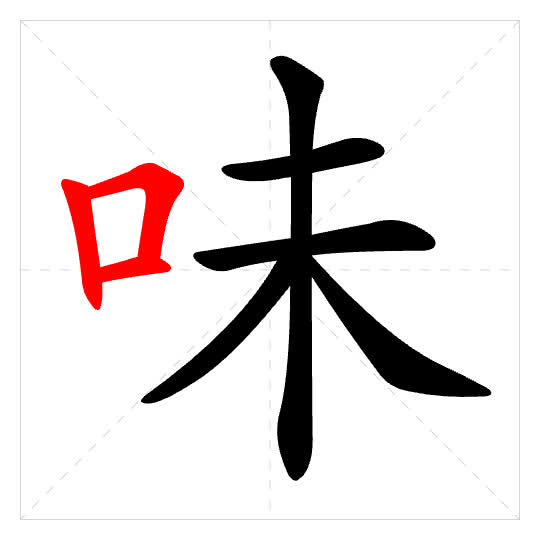
Basic Meaning
n
Often used as 味道 (wèi dào). In this sense, it refers specifically to the sensation of the tongue, which is different from smell.
flavor; taste.
(味儿)味道,滋味,舌头尝东西所得到的感觉。
Words:
Sentences:
- 这道菜的甜味很自然,很好吃。The sweetness of this dish is very natural and delicious.
- 这碗汤味同嚼蜡,一点味道都没有。This bowl of soup is tasteless; it has no flavor at all.
n
Often used as 气味 (qì wèi). In this sense, it refers specifically to the perception of the nose.
smell; odor; scent.
(味儿)物质所具有的能使鼻子得到某种嗅觉的特性。
Words:
气味香味臭味
Sentences:
- 房间里有一股奇怪的气味。There's a strange smell (odor) in the room.
- 面包刚烤好,香味太诱人了。The bread is freshly baked, and the aroma is so tempting.
n
Almost always used as part of a compound word referring to types of food (e.g., 海味, 野味).
food; delicacy; dish.
指某些菜肴、食物。
Words:
海味野味美味山珍海味
Sentences:
- 他喜欢尝试各地的野味。He likes to try local game (wild delicacies) from various places.
v
This verb is often used in an abstract or literary way to mean pondering or appreciating an idea, feeling, or experience.
to savor; to appreciate; to reflect on.
体会;研究;辨别味道。
Words:
体味玩味耐人寻味回味品味
Sentences:
- 我喜欢品味一杯好茶的清香。I like to savor the delicate fragrance of a good cup of tea.
- 这部电影的结局很耐人寻味。The ending of this movie gives one much food for thought (is deeply thought-provoking).
q
A specific classifier used in the context of traditional Chinese medicine prescriptions to count herbal ingredients.
(measure word for ingredients in traditional Chinese medicine)
中药配方,药物的一种叫一味。
Sentences:
- 医生给我开的中药方子有七味药。The traditional Chinese medicine prescription the doctor wrote for me has seven medicinal ingredients.
n
Used to describe the interesting, appealing, or enjoyable quality of an activity or thing. Differs from the sensory meanings (1 & 2).
interest; charm; savor.
(味儿)意趣;情趣。
Words:
趣味意味深长兴味兴味盎然情味
Sentences:
- 他讲的故事很有趣,充满了趣味。The story he told was very interesting, full of fun.
- 她的话看似简单,其实意味深长。Her words seem simple but are in fact very meaningful and thought-provoking.
Writing & Component
Radical口
Structureleft_right
Stroke Count8
Strokes丨𠃍一一一丨丿㇏