
叔叔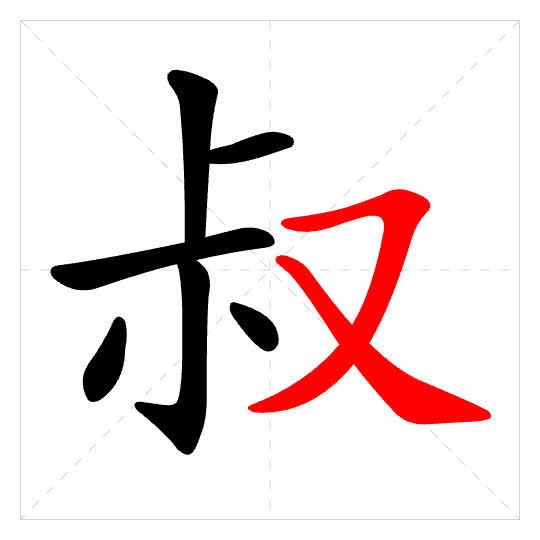
Basic Meaning
n
Often reduplicated as 叔叔 (shu1 shu1), a common and polite way to address male strangers or acquaintances in modern Chinese, similar to 'Mister' or 'Sir'.
Father's younger brother; uncle; a polite term for a man of father's generation who is younger than one's father.
叔父,父亲的弟弟。又称跟父亲同辈而年纪较小、没有亲属关系的男子(叠)。
Words:
大叔叔叔叔父老叔伯叔
Sentences:
- 这位叔叔是我爸爸的同事This uncle is my dad's colleague.
n
Husband's younger brother.
丈夫的弟弟。
Words:
叔子小叔叔嫂小叔子
Sentences:
- 我丈夫的弟弟,也就是我的小叔,明天要来家里做客My husband's younger brother, that is, my brother-in-law (younger), is coming to visit tomorrow.
- 她和她的叔子关系非常好She gets along very well with her husband's younger brother.
n
This usage is primarily historical or found in classical contexts and names.
The third-born among brothers (in the traditional ordering of 伯 (Bo2, eldest), 仲 (Zhong4, second), 叔 (Shu1, third), 季 (Ji4, youngest)).
兄弟里排行常用“伯、仲、叔、季”做次序,叔是老三。
Words:
伯仲叔季
Sentences:
- 在古代,兄弟排行“伯仲叔季”,其中“叔”In ancient times, the order for brothers was 'Bo, Zhong, Shu, Ji', where 'Shu' was the third son.
- 他的名字里有“叔”字,因为他排行His name contains the character 'Shu' because he was the third-born son.
Writing & Component
Radical又
Structureleft_right
Stroke Count8
Strokes丨一一亅丿丶㇇㇏