
及及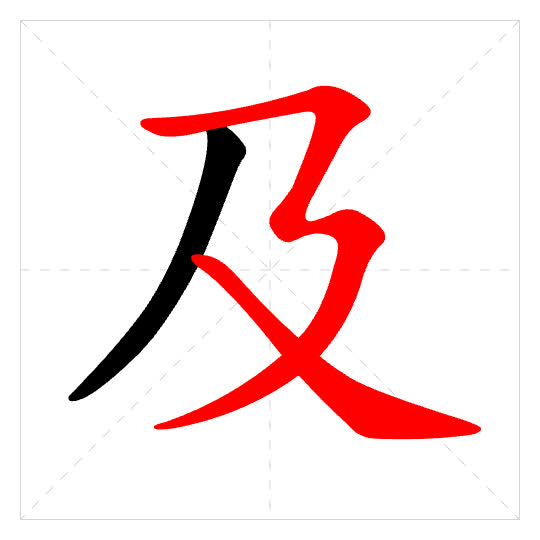
Basic Meaning
v
Often used in formal contexts or compound words to describe influence, scope, or extent.
to reach; to extend to; to attain.
达到。
Words:
波及普及由表及立
Sentences:
- 科技的发展已经普及到了农村。The development of technology has now spread to the countryside.
- 经济危机的影响波及全球。The impact of the economic crisis reached across the globe.
v
Commonly used in positive phrases related to good timing or seizing an opportunity.
to take advantage of (an opportunity); to catch up with.
趁着;赶上。
Words:
及时及早望尘莫及
Sentences:
- 下雨了,幸好我们及时回到了家。It started raining; fortunately, we made it home in time.
- 他及早发现了问题,避免了损失。He discovered the problem early and avoided losses.
v
Used only in negative constructions like '不' or '莫'. It means 'cannot compare to' or 'is not up to the standard of'.
to compare favorably with; to be as good as.
比得上(只用于否定式)。
Sentences:
- 我的中文水平远不及你。My Chinese level is far inferior to yours.
v
Literary or formal. Often found in set phrases or classical contexts.
to extend to; to take into account.
〈书〉推及;顾及。
Words:
攻其一点,不及其余推及顾及
Sentences:
- 考虑计划时要顾及所有人的意见。When considering the plan, you must take everyone's opinions into account.
conj
A conjunction connecting nouns or noun phrases. It is more formal than '和' and often implies an inclusive list, sometimes with a slight sense of 'reaching' from one item to the next.
and; as well as.
连接并列的名词或名词性词组。
Words:
内陆及沿海地区
Sentences:
- 公司在北京、上海及广州都有办公室。The company has offices in Beijing, Shanghai, and Guangzhou.
- 本次会议邀请了老师、学生及家长参加。This meeting has invited teachers, students, and parents to attend.
v
Primarily used in the negative (来不及) and positive (来得及) forms to express having or lacking enough time.
to catch up from behind; to be in time for.
从后头跟上。
Words:
来得及赶不及
Sentences:
- 快点儿,不然我们赶不及火车了。Hurry up, otherwise we won't catch the train in time.
- 别担心,还有一个小时,来得及。Don't worry, there's still an hour left; we have enough time.
Writing & Component
Radical又
Structuresingle
Stroke Count3
Strokes丿㇋㇏