
卫卫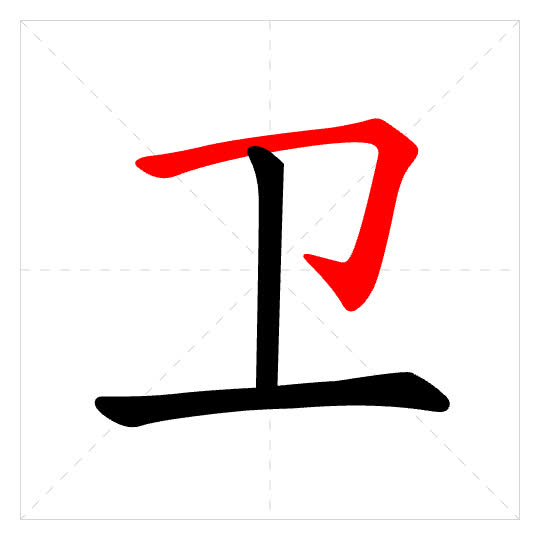
Basic Meaning
v
Often used in formal or military contexts, e.g., 保卫 (bǎo wèi) means 'to defend'.
to protect; to defend; to guard
保护;防护。
Words:
捍卫保卫自卫守卫防卫
Sentences:
- 士兵们勇敢地保卫国家。The soldiers bravely defend the country.
- 我们需要自卫来保护自己。We need self-defense to protect ourselves.
n
Commonly used in compound words like 门卫 (mén wèi) for 'gatekeeper' or 后卫 (hòu wèi) for 'rear guard'.
guard; sentry; person responsible for protection or defense
负责保护、防守工作的人。
Words:
后卫门卫前卫警卫卫士
Sentences:
- 门卫每天检查进出的人。The gatekeeper checks people entering and leaving every day.
- 他在足球比赛中担任后卫。He plays as a defender in the football match.
n
This sense is mostly found in historical or geographical contexts, e.g., 威海卫 (Wēi hǎi wèi) is a city name.
garrison; military station (used historically, now mainly in place names)
明代驻兵的地点,驻军人数比“所”多(后来只用于地名)。
Words:
威海卫天津卫
Sentences:
- 威海卫是一个美丽的海滨城市。Weihaiwei is a beautiful coastal city.
- 天津卫在历史上是重要的军事地点。Tianjinwei was an important military location in history.
Writing & Component
Radical卩
Structuresingle
Stroke Count3
Strokes𠃌丨一