
判判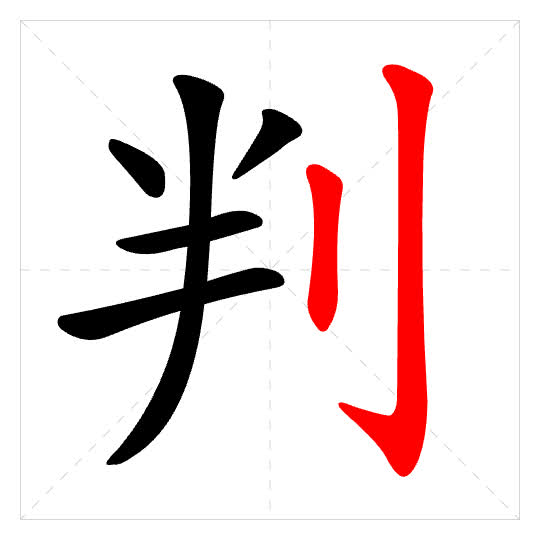
Basic Meaning
v
Often used in formal contexts to describe discerning or making a clear distinction between things.
to separate; to distinguish; to differentiate
分开;分辨。
Words:
判别判定判断判明判别是非
Synonyms:
辨
Sentences:
- 这种真假很难判别。It's very hard to distinguish the real one from the fake one here.
- 你需要有判断是非的能力。You need the ability to judge right from wrong.
adj
Used as an adjective, often in set phrases. Indicates a very clear, noticeable difference.
distinctly different; markedly dissimilar
明显不同。
Words:
判然不同判若两人判若鸿沟
Synonyms:
别异
Antonyms:
Sentences:
- 他剪了头发,前后判若两人。He cut his hair and now looks like a completely different person.
v
Used in contexts of assessment, grading, and making a judgment call, often not in a strictly legal sense.
to judge; to evaluate; to decide (on a result or score)
裁定;评定。
Words:
裁判评判谈判判卷子判分
Synonyms:
裁评
Sentences:
- 老师正在判卷子。The teacher is grading the exam papers.
- 谈判正在进行中。The negotiations are underway.
v
Specifically used in judicial and legal contexts.
to pass judgment; to sentence (in a court of law)
判决,司法机关对案件做出决定。
Words:
判案判处判官判决判罪公判审判宣判
Sentences:
- 法院判他三年有期徒刑。The court sentenced him to three years of imprisonment.
- 这个案子的判决下星期宣布。The verdict for this case will be announced next week.
Writing & Component
Radical刂
Structureleft_right
Stroke Count7
Strokes丶丿一一丿丨亅