
凌凌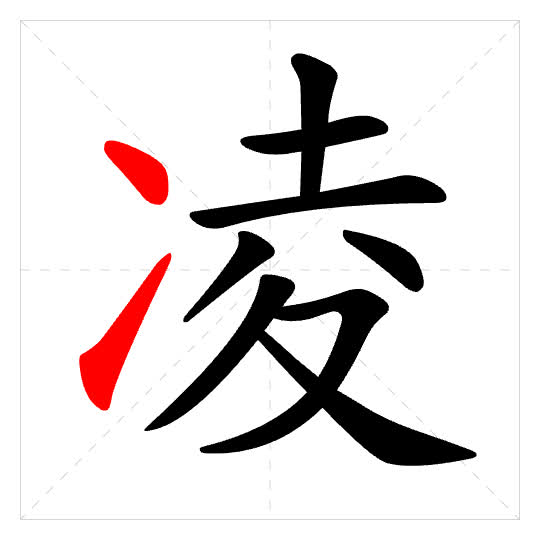
Basic Meaning
v
Often used in negative contexts, implying aggression or harm towards others, as in 欺凌 or 凌辱.
to bully, to oppress, to insult
欺凌,侵犯,欺压。
Words:
欺凌盛气凌人凌辱凌虐凌压
Synonyms:
欺辱侮虐
Sentences:
- 她的行为带有盛气凌人的态度。Her behavior has an overbearing attitude.
- 他不应该欺凌同学。He shouldn't bully his classmates.
v
Commonly used in time-related contexts, e.g., 凌晨 (before dawn), indicating closeness or immediacy.
to approach, to draw near
迫近;逼近。
Words:
凌晨凌逼凌近凌迫
Synonyms:
Sentences:
- 我每天凌晨五点起床。I wake up at five o'clock every morning before dawn.
- 考试日期凌近,我们需要加紧复习。The exam date is approaching, so we need to intensify our review.
v
Often used in poetic or descriptive contexts to convey elevation or ambition, as in 凌空 or 凌云.
to rise high, to be in the air
升高;在空中。
Words:
凌空凌云凌霄凌驾壮志凌云
Synonyms:
升腾
Sentences:
- 飞机凌空飞行,景色很美。The plane flies high in the air, and the scenery is beautiful.
- 他有壮志凌云的梦想。He has ambitious dreams that reach the clouds.
Writing & Component
Radical冫
Structureleft_right
Stroke Count10
Strokes丶㇀一丨一丿丶丿㇇㇏